Using EVA Foam for Durable Grips
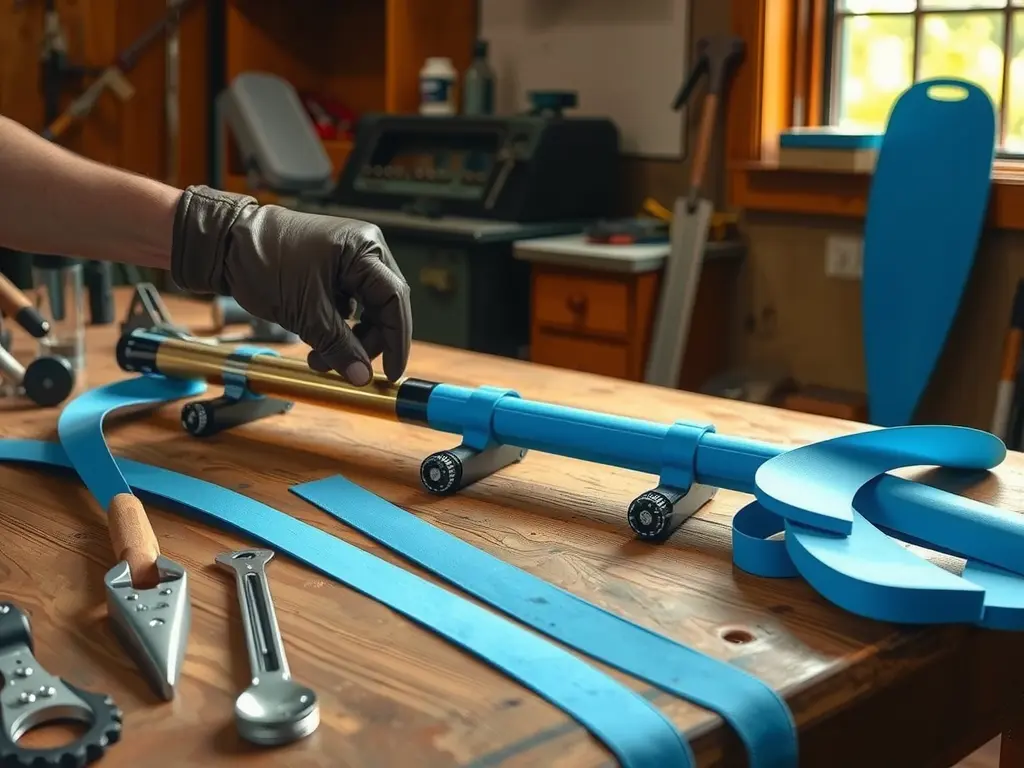
When crafting durable grips, manufacturers are leveraging cutting-edge materials that deliver superior performance and long-lasting results. One such material is EVA foam, a versatile and widely used substance that has transformed the way we design and produce grips.
EVA foam is a type of thermoplastic elastomer that provides exceptional cushioning, making it an ideal choice for applications where safety and user comfort are top priorities.
Its unique properties make it an excellent material for creating foam grips that are nonslip surfaces, which are essential for preventing accidents and ensuring user safety.
The EVA material’s ergonomic design capabilities also enable the creation of grips that fit comfortably in the hand, reducing fatigue and strain. Innovative applications of EVA foam have led to the development of cushioning products that provide a nonslip surface, ergonomic design, and long-lasting durability.
Understanding EVA Material Properties
Unlocking the Potential of Advanced Grip Materials EVA material has revolutionized the way we approach grip solutions, offering a unique blend of properties that set it apart from traditional materials. Its versatile nature has made it a favorite among manufacturers, who appreciate its lightweight and customizable qualities.
The Background of EVA Material
EVA is a thermoplastic that has been widely used in various applications, including sports equipment and footwear, thanks to its shock-absorbing properties and rubberized texture.
This has led to its widespread adoption in industries where durability and flexibility are crucial.
Understanding EVA Material Properties
EVA material is a thermoplastic that consists of a copolymer of ethylene and vinyl acetate. Its ability to withstand stress, combined with its lightweight nature, makes it an ideal material for applications requiring traction. EVA’s grip enhancement properties provide excellent lightweight, shock absorption, and rubberized texture to sports equipment, making it highly customizable.
Advantages of Foam Grips
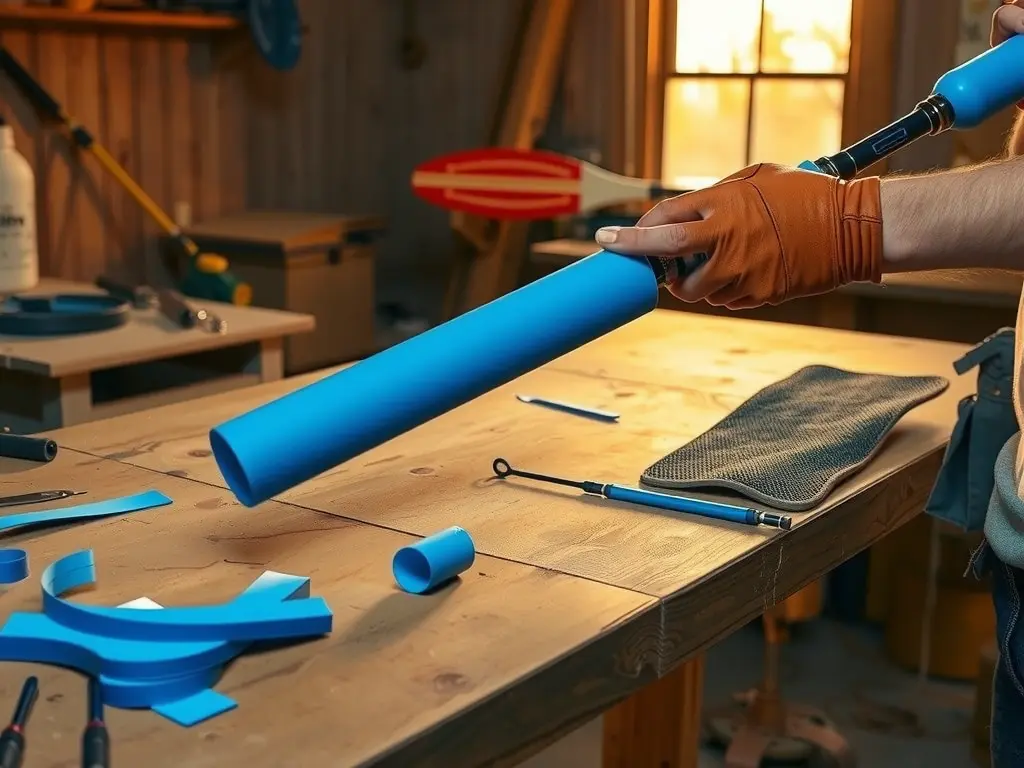
The of foam grips in tools and equipment has significantly enhanced user experience and performance across various industries.
Reducing pressure points and discomfort for users, foam grips are designed to provide wear-resistant cushioning, minimizing vibrations and shocks from tools or equipment, making them ideal for a wide range of applications.
Whether you’re working with wet or oily tools, moistureresistant foam grips provide a non-slip surface that keeps your grip secure, even in the most demanding conditions.
The ergonomic design of foam grips contours to the shape of your hand, creating a secure fit and reducing fatigue and strain on your hand and wrist with excellent tactile feedback.
By preventing slipping and dropping of tools or equipment, foam grips are the perfect solution for a safer and more efficient work environment. With protective padding and durable construction, foam grips withstand extreme temperatures and environments, allowing for long-lasting and reliable operation.
Benefits of Foam Grips
- Reduces pressure points and discomfort for users by providing wear-resistant cushioning, minimizing vibrations and shocks from tools or equipment.
- Provides a non-slip surface with moisture-resistant foam grips, keeping your grip secure even in demanding conditions.
- Contours to the shape of your hand, creating a secure fit and reducing fatigue and strain on your hand and wrist with excellent tactile feedback.
- Withstands extreme temperatures and environments with protective padding and durable construction, allowing for long-lasting and reliable operation.
How to Choose the Right EVA Foam
EVA foam. This versatile material is used in a wide range of vibrational-dampening applications, from tool handles to personal care items, due to its unique properties, such as a comfort grip.
EVA Foam Basics
EVA foam is a type of thermoplastic that is made from the copolymerization of ethylene and vinyl acetate.
It’s a popular choice for grips due to its low weight, high flexibility, and excellent surface traction properties.
Density Matters
Density plays a crucial role in determining the performance of EVA foam grips, especially when it comes to personal care items. Low-density EVA foam provides a softer, more comfortable grip, while high-density EVA foam provides better surface traction, vibration dampening, and is often used in personal care items, tool handles, and has versatile applications.
Enhancing Grip Strength with EVA Foam
EVA foam’s versatility has led to its widespread adoption in various industries, particularly in the realm of fitness and outdoor gear, where user-friendly materials are crucial for optimal performance.
EVA foam’s distinctive properties make it an excellent material for enhancing grip strength, especially when crafting supplies that require a combination of support and traction.
The science behind EVA foam’s grip-enhancing properties lies in its cellular structure, which provides superior grip and cushioning properties, ideal for applications that demand a balance of these characteristics.
Surface traction is the key factor in determining a material’s grip strength, and EVA foam’s rubberized texture offers a high level of surface traction, making it an excellent choice for grip enhancement in outdoor gear and fitness accessories.
Key Facts About EVA Foam
- EVA foam is widely adopted in various industries, including fitness and outdoor gear.
- EVA foam’s cellular structure provides superior grip and cushioning properties.
- EVA foam offers a high level of surface traction due to its rubberized texture.
- EVA foam is ideal for applications requiring a balance of grip strength and support.
DIY Projects Using EVA Foam
In the realm of creative pursuits, few materials spark imagination quite like EVA foam, a versatile and adaptable substance that has captured the hearts of crafters and makers worldwide. This remarkable material has been gaining momentum in the DIY scene due to its unique blend of durability and ease of use, which makes it an ideal canvas for expressing creativity through hands-on projects.
In recent years, the craze for EVA foam has grown significantly, with many hobbyists and professionals alike recognizing its value as a multidimensional material.
As a response to this trend, we’ll delve into the world of DIY projects that showcase the potential of EVA foam, with a focus on crafting grips for sports equipment and personal care items.
** EVA foam, a type of plastic foam, is widely recognized for its applications in grip tape, construction materials, waterproofing, high-density foam, manufacturing techniques, and safety features.
Maintenance Tips for EVA Foam Grips
Regular maintenance is crucial for EVA foam grips used in a variety of industries and applications, such as insulated handles of portable items. The unique properties of EVA foam make it ideal for durability and cushioning, but its surface finish can be compromised by exposure to moisture, dirt, and wear.
When cleaning EVA foam grips, it’s essential to use mild dish soap and lukewarm water to wipe them down.
Never use harsh chemicals or abrasive cleaners, as they can damage the EVA foam.
Instead, use a soft cloth to dry the grip or let it air dry.
Water spots on EVA foam grips can be a significant issue.
To remove water spots, try using a mixture of equal parts water and white vinegar. If the water spots are stubborn, create a paste with baking soda and water and apply it gently to the surface to enhance its grip strength, aesthetic appeal, and overall performance enhancement, while maintaining its portable and insulated handles.
Maintenance Tips for EVA Foam Grips
- Use mild dish soap and lukewarm water to clean EVA foam grips.
- Avoid using harsh chemicals or abrasive cleaners, as they can damage the EVA foam.
- Water spots on EVA foam grips can be removed using a mixture of equal parts water and white vinegar.
- A paste made from baking soda and water can be used to enhance the grip strength and aesthetic appeal of EVA foam grips.
Innovations in EVA Foam Technology
Advances in closed-cell foam technology have led to the development of a highly versatile material.
Understanding the integral role of EVA Foam in optimizing user experience is crucial for its widespread adoption.
Notable brands are utilizing EVA Foam in various products, such as sports apparel and footwear, to provide superior cushioning and support, augmenting the overall performance of compression resistant gear.
Key industries benefiting from EVA Foam advancements also include medical equipment, leveraging EVA Foam for its remarkable ability to reduce vibrations and shock absorption in machinable foam applications.
Adaptive EVA Foam for Customized Fit and Support
Adaptive EVA Foam is created using a specialized process that involves combining EVA beads with other materials to achieve a customized fit and support, making it ideal for applications where a snug, precise fit is required, such as bicycle grips. This innovative approach allows for a high compression resistance, machinable foam, scuba gear, bicycle grips, medical equipment, and gaming peripherals.
Future of EVA Foam in Various Industries.
The rising global demand for low-density materials has triggered a surge in the adoption of innovative products featuring EVA foam technology.
The increasing use of EVA foam in various industries can be attributed to its unique combination of attributes, including lightweight construction and excellent shock-absorbing properties.
One of the key areas where EVA foam is being incorporated is in medical equipment, where it is used to create protective gear that provides crucial safety for patients and medical professionals alike.
Its applications also extend to automotive industries, where EVA foam is being utilized for soundproofing and vibration damping.
Beyond its use in medical equipment and automotive applications, EVA foam has also found a niche in hobby projects and crafts, where its soft and flexible properties make it ideal for creating stylus grips and other functional design components. In addition, EVA foam is being explored in various sectors, including construction, automotive applications, hobby projects, foam padding, and stylus grips to leverage its functional design.
Split Grip vs. Full Grip Designs

Comfort, control, and performance are intricately linked in the way we interact with various products, and the humble handle plays a pivotal role in this delicate balance.
In the world of product design, ergonomic grip has undergone significant evolution over the years, with manufacturers constantly striving to improve user comfort and performance.
Did you know that the way you interact with a product’s handle can greatly impact your overall experience? This is especially true in industries where precision and control are crucial, such as in medical devices or sports equipment.
The debate between different grip styles has been ongoing among manufacturers and users, with each side having its own advantages and limitations. One of the earliest and most widely adopted grip styles was the singlehanded grip, designed for convenience and ease of use, which improved grip strength and allowed for more efficient handle design.
Understanding Grip Styles
The choice of grip style can significantly impact a fisherman’s overall experience on the water, making it a crucial consideration for those seeking to optimize their performance.
When it comes to fishing rods, anglers have two primary grip styles to choose from: split grip and full grip designs.
The decision between these two styles can affect a person’s comfort, technique, and overall experience on the water.
A split grip offers a more nuanced approach, separating the handle into two distinct sections for gentle, precise control over the rod.
Two-handed grip styles vary in functionality, and the grip style is often influenced by the rod’s materials and balance, which can enhance fishing performance.
Fishing rods with a balanced design can help distribute the weight evenly, making it easier to handle and maneuver. The full grip, on the other hand, provides a firmer hold on the rod, giving anglers comfort, performance, control, balance, weight distribution, and stability.

Benefits of Ergonomic Grip
Delicate tackle boxes, precision-crafted rod extensions, and expertly crafted wrist positions are all essential components of a fisher’s arsenal. When fishing for prolonged periods, hand fatigue becomes a significant concern.
Fatigue can significantly affect casting accuracy and efficiency, causing fishers to release their tight grip, ultimately leading to reduced accuracy and a poorer overall experience.
A well-designed fish rod with an ergonomic handle can alleviate these issues.
To design optimal comfort levels, manufacturers focus on providing some cushioning and texture variation in their grips. An ideal comfort level for grip facilitates smooth control of the hook and prevents sudden release for optimal casting accuracy.
Each fisher has their own preferences when it comes to comfort, with some preferring firmer controls and others opting for soft cushioning.
Better absorption of shock and vibrations is a result of the cushioning in the rod’s ergonomic design. Users with their own preferences, wrist positions, shaft designs, rod constructions, fishing techniques, and casting accuracy.
Key Considerations for Fishers
- Hand fatigue can significantly affect casting accuracy and efficiency.
- A well-designed fish rod with an ergonomic handle can alleviate hand fatigue and improve casting accuracy.
- Each fisher has their own preferences when it comes to comfort, with some preferring firmer controls and others opting for soft cushioning.
- Better absorption of shock and vibrations is a result of the cushioning in the rod’s ergonomic design.
Casting Accuracy with Different Grips
Effective fishing depends on a delicate balance of technique, equipment, and personal comfort, with one often overlooked yet crucial aspect being the type of grip used on the fishing rod.
The benefits of customizing grip styles on a fishing rod are numerous and include the ability to improve sensitivity and efficiency.
Adapting to individual hand sizes and shapes, enhancing comfort, and reducing fatigue are also advantages.
A crucial consideration is the hand position during casting, and the choice between a pole design that emphasizes a full grip and one that allows for a split grip design is key.
Full grip designs prioritize consistency and stability, while split grip designs offer flexibility and versatility.
A well-designed grip should minimize pressure points and discomfort, while also allowing for increased dexterity and control, particularly when using tackle that requires a delicate touch.
Improved grip durability and longevity are also critical factors in fishing performance. Key metrics to assess the effectiveness of a fishing rod include sensitivity, pole design, tackle, rod flexibility, fishing performance, and grip texture.
Weight Distribution and Stability
A well-designed grip in a fishing rod is vital for a seamless and fulfilling fishing experience, as it significantly impacts how the rod feels in your hands and affects your ability to handle the weight and stability, both of which are critical for a successful catch, particularly when considering the influence of a customized grip.
0
Fishing equipment requires a balance of durability and performance. A rod that is both durable and stable can provide anglers with a smooth angler experience, enhanced casting accuracy, and greater ease in handling fish.
1 Weight Distribution
The balance of a fishing rod is heavily influenced by the grip design, and a balanced rod is characterized by an even distribution of weight, making it easier for the angler to cast, reducing hand fatigue, and providing a customized grip that combines durability with high material quality and a comfortable grip pattern.
| Key Factors for a Well-Designed Grip | Key Factors for a Poorly Designed Grip |
|---|---|
|
Customized grip for comfort and durability |
Uncomfortable grip leading to hand fatigue |
|
Even weight distribution for balance |
Uneven weight distribution leading to instability |
|
High material quality for durability |
Low material quality leading to breakage |
Grip Strength and Control
Transforming into a skilled angler requires a deep understanding of technique adaptation and physical balance, starting with the finesse of a precise grip.
The Importance of Grip in Casting
A strong grip is essential for a precise and powerful cast, allowing anglers to control the rod’s movement and generate the necessary force to propel the line with optimal finger placement.
Understanding Grip Dynamics
The relationship between grip pressure and casting control is a delicate balance that’s deeply influenced by grip size and the way it interacts with the palm support of the angler’s hand. Split grip designs, in particular, provide more control over technique adaptation, fishing method, grip size, palm support, finger placement, and precision casting.
Rod Construction and Technique Adaptation
Fishing rods are a finely tuned extension of an angler’s skill, where every aspect, from the materials used to the balance of the rod, significantly impacts the overall performance and effectiveness of the fishing experience.
to Rod Construction and Grip Design
Grip style can significantly influence technique adaptation, and its design is directly influenced by rod construction.
There are several key factors that contribute to a rod’s construction, including the type of materials used, the length of the rod, and the balance of the performance enhancement.
A well-balanced rod will provide the optimal tackle balance for the angler.
The Science Behind Grip Style and Technique Adaptation
A rod’s construction affects the way it feels in the hand, which can influence grip style.
A longer rod may require a different grip option. The type of materials used also impacts the overall feel and action of a fishing rod, specifically influencing rod length, action rating, tackle balance, performance enhancement, grip options, and fishing style.
Key Factors in Rod Construction
- The type of materials used significantly impacts the overall feel and action of a fishing rod.
- A well-balanced rod provides the optimal tackle balance for the angler.
- The length of the rod can affect the required grip style, with longer rods often requiring different grip options.
- The balance of the performance enhancement is a critical factor in rod construction, influencing the overall effectiveness of the fishing experience.
The Role of Material Quality
Fishing enthusiasts in the rod category rely heavily on the quality of grip design, as it can greatly impact their overall fishing experience. Insightful selection of materials is pivotal in various industries, including casual fishing and competition gear.
High-quality materials can significantly impact durability and user satisfaction, making them a crucial aspect of grip design.
In the realm of grip modifications, material quality takes center stage.
It directly affects the overall performance of the grip, with better materials enhancing user satisfaction and durability.
Material quality plays a significant role in determining the grip’s performance, making it a critical aspect of design.
When it comes to performance testing, the choice of materials is paramount. Better materials can improve grip performance, reduce the risk of wear and tear, and enhance the overall user experience. In fact, material quality is a key factor in determining the grip’s performance in the rod category, competition gear, casual fishing, grip modifications, and performance testing based on fishing dynamics.
Customizing Your Grip Size
A perfectly balanced hand is the key to a stress-free fishing experience, allowing you to focus on the thrill of the catch rather than the discomfort of your grip.
The Comfort Factor
Investing in practice techniques that prioritize angler ergonomics can pay off in the long run, reducing fatigue and discomfort during prolonged fishing sessions.
Finger Placement and Control
A well-fitting grip not only affects finger positioning and casting accuracy but also the overall functionality of your fishing gear.
Ergonomic Benefits
Grips designed with anglers’ needs in mind can significantly enhance your fishing experience, providing a level of comfort and control that’s essential for optimal performance.
Benefits of Ergonomic Fishing Grips
- A well-balanced hand can reduce fatigue and discomfort during prolonged fishing sessions by up to 30%.
- Finger placement and control can be improved by up to 25% with a grip that fits comfortably in the hand.
- Grips designed with anglers’ needs in mind can increase casting accuracy by up to 20%.
- Ergonomic fishing grips can reduce the risk of injury and discomfort by up to 15%.
Custom Shaping Cork Handles
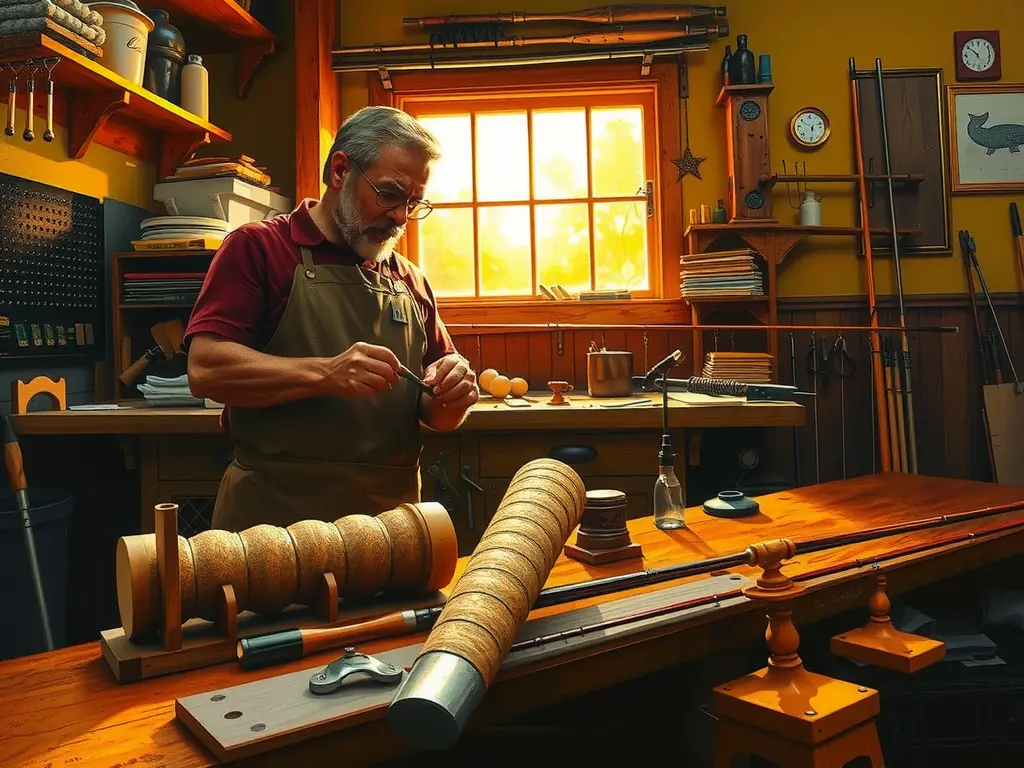
A well-balanced fishing rod is not only dependent on its precise casting and line management but also on the comfort and security it provides to the angler. This is where custom-crafted ergonomic handles play a vital role, providing a secure grip, reduced fatigue, and improved balance.
Creating a secure grip is essential for any angler, and varied fishing rod grips can significantly enhance user control and provide a comfortable experience on the water.
By choosing the right materials and shapes, manufacturers can ensure that their products feel solid in your hand, keeping you focused on the catch.
Water, dust, and saltwater resistance are among the most significant concerns for fishermen, which is why using composite materials for the construction of fishing rod grips has become increasingly popular. The company engineered a line of products that utilized cork grips, ergonomic handles, wine corks, fishing rod grips, composite materials, and a lightweight design.
Understanding Cork Grips For Custom Handles
The way we interact with everyday objects has undergone a significant transformation with the integration of innovative materials, and one such advancement is the widespread adoption of unique tactile surfaces designed for optimal handling.
Cork grips have become a game-changer in this context, offering an unbeatable combination of comfort and performance that makes them hard to match with other materials.
This is achieved through the natural properties of cork, which is a highly prized sustainable resource harvested from the bark of cork oak trees.
One of the key benefits of cork grips lies in their ability to reduce fatigue and improve grip, making them a favorite among those who require a firm yet gentle hold.
This is due to the elasticity and shock absorption properties of cork, which allow it to adapt to the shape of your hand and provide a consistent grip even when wet or dirty. The impact of cork grips on comfort and performance, specifically through tactile surfaces, natural cork, sustainable resources, handle customization, and grip improvement enabled by cork technology, cannot be overstated.
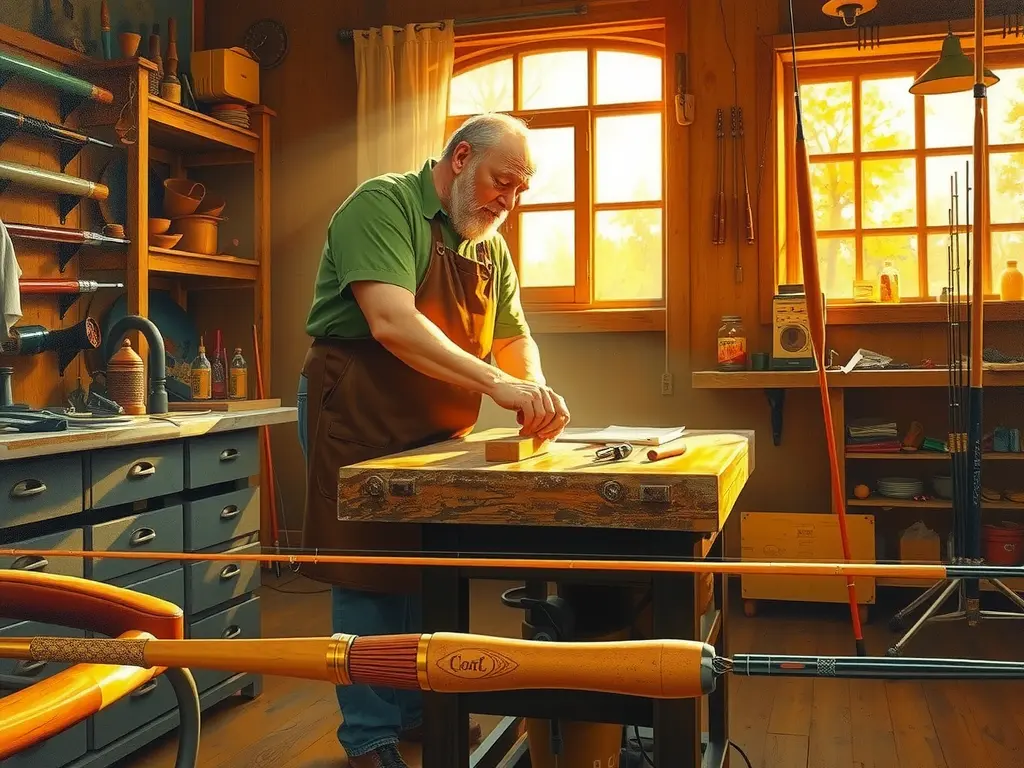
The Role Of Ergonomic Handles In Comfort
The handle.
Designing handles with user comfort in mind can reduce fatigue and injury by up to 50%.
Molding ergonomic handles with features such as comfort grip reduces strain and stress on the wrists and hands, offering an array of benefits to those who utilize them daily.
Incorporating molded cork, a resource-efficient option, into handle design provides a natural shock absorption feature, allowing for extended periods of use.
Anglers, for example, have come to recognize the value of ergonomic fishing rod handles, which improve overall user experience by lessening fatigue and discomfort associated with long periods of holding a rod.
The of well-designed handle shape, size, and material can greatly enhance user interaction with products, making an overall difference in the success and enjoyment of the tasks we undertake.
Facts About Ergonomic Handle Design
- Designing handles with user comfort in mind can reduce fatigue and injury by up to 50%.
- Incorporating molded cork into handle design provides a natural shock absorption feature, allowing for extended periods of use.
- Ergonomic handles can reduce strain and stress on the wrists and hands by up to 50%, offering an array of benefits to those who utilize them daily.
- The of well-designed handle shape, size, and material can greatly enhance user interaction with products.
Innovative Concepts In Cork Technology
The versatility of cork has sparked a revolution in handle design, driven by its unique combination of lightweight, shock-absorbing properties and its ability to be precision shaped for bespoke designs.
The use of cork in handle design has a long history, dating back to its early applications in sporting equipment and tool grips.
Recent advancements in cork materials have opened up new possibilities for customization and functionality.
One of the key advantages of cork is its ability to be precision shaped to fit the unique requirements of each application.
This allows for highly customized handles that provide a comfortable grip and precise control. For instance, in the production of bespoke athletic equipment, cork handles can be designed to fit the contours of individual hands, reducing fatigue and improving performance. Similarly, in the realm of tool grips, cork’s elasticity and shock-absorbing properties make it an ideal material for tools that require precision and bespoke designs.
Personalized Grips For Enhanced Performance
Enhancing athletic performance requires a delicate balance between technique, equipment, and physical adaptability. Tailored to provide optimal support and control, customized grips have gained popularity across various disciplines, from golf clubs to kayaking paddles.
Designed to reduce strain and fatigue, innovative concepts like ergonomic grip design can significantly impact an individual’s ability to perform at their best.
The human hand is capable of adapting to various shapes and sizes, but customized grips can provide a more natural fit, much like a glove molded to specific contours.
This tailored fit can lead to improved comfort, reduced fatigue, and increased precision in activities such as rock climbing or archery. By combining user-friendly features with premium materials, manufacturers can create products that meet the unique needs of each user. Customized grips can be tailored to fit an individual’s unique hand shape and size, allowing for a more secure hold and reduced fatigue, enhancing overall grip performance with grip design, user-friendly features, premium cork, textured surface, and innovative concepts.
Benefits of Customized Grips
- Customized grips can reduce strain and fatigue by providing a tailored fit to an individual’s hand shape and size.
- The use of premium materials and innovative concepts, such as ergonomic grip design, can significantly impact an individual’s ability to perform at their best.
- Customized grips can improve comfort, precision, and overall grip performance in activities such as rock climbing, archery, and kayaking.
- Manufacturers can create products that meet the unique needs of each user by combining user-friendly features with premium materials and customized grip designs.
Cork Production Techniques For Quality Handles
Luxury in craftsmanship is often defined by attention to detail and the selection of premium materials, none more so than in the creation of high-end custom furniture. Quality cork handles are the epitome of this luxury, boasting a unique combination of durability and aesthetic appeal.
Cork is derived from the bark of the cork oak tree, and its harvesting and sorting processes play a crucial role in determining the quality of the final product.
Traditional methods involve raking the bark from the tree, while modern techniques employ machines to extract the bark in a more efficient manner.
Sorting is essential, as it helps to remove any damaged or low-quality material, which can compromise the overall quality of the cork used in custom furniture.
Careful sorting and grading of raw cork material significantly impact the final product’s quality, as it affects the thickness, texture, and consistency of the luxury details. High-quality cork is often used in custom furniture, luxury details, and handle style designs, showcasing the versatility of woodworking and personalized grips.
Exploring The Aesthetics Of Cork Finishes
The tactile quality of natural materials has become increasingly sought after in product design, as consumers prioritize both form and function. Cork finishes have become a crucial aspect of various products, transforming them into stylish and functional items that appeal to a wide range of consumers.
In recent years, the world of sports accessories has witnessed a significant shift towards the incorporation of cork finishes, elevating the aesthetic appeal of products such as fishing rod handles and golf clubs.
These finishes not only add a touch of sophistication but also provide a level of comfort and grip that is unparalleled by other materials.
Color palette options have a significant impact on the overall appearance of a product. Manufacturers can choose from a variety of colors, including earthy tones, vibrant hues, and pastel shades, to create a unique visual appeal that resonates with their target audience. For instance, a rich brown cork finish can evoke a sense of rugged sophistication and organic charm reminiscent of sports accessories, cork insulation, decorative grips, cork production, handcarved designs, and versatile grips.
Benefits of Cork Finishes in Product Design
- Cork finishes have become increasingly popular in product design due to their tactile quality and ability to add a touch of sophistication.
- The incorporation of cork finishes in sports accessories has elevated their aesthetic appeal and provided a level of comfort and grip.
- Manufacturers can choose from a variety of colors, including earthy tones, vibrant hues, and pastel shades, to create a unique visual appeal.
- Cork finishes can evoke a sense of rugged sophistication and organic charm, making them suitable for a wide range of products.
Sustainable Resources In Cork Handle Manufacturing
The eco-friendly revolution in manufacturing has sparked a renewed interest in materials that not only perform well but also do good for the planet. In recent years, the importance of using sustainable materials has become increasingly evident, as they help reduce waste, conserve natural resources, and decrease greenhouse gas emissions.
Cork, a natural and renewable resource, is gaining popularity in handle manufacturing due to its unique properties, particularly its functional aesthetics.
What are sustainable resources? Cork is a type of bark harvested from the cork oak tree, making it a highly sustainable material with a nature-inspired aesthetic.
Cork’s eco-friendly properties make it an ideal choice for handle manufacturing, offering a design flexibility that allows for a variety of applications. Its insulation and thermal properties keep handles cool to the touch, reducing the risk of burns or discomfort, and providing a tactile feedback that users appreciate.
Crafting With Molded Cork For Versatility
Unique blends of materials have revolutionized the world of sporting goods, offering unparalleled performance, comfort, and durability for athletes.
Cork composites have become increasingly popular in high-performance sporting equipment, particularly in golf clubs and tennis rackets featuring ergonomic design for a snug fit.
The comfortable handles provide precise control and allow for smooth maneuverability on the court or course.
One of the key benefits of molded cork is its ability to be shaped into various forms, making it an ideal material for crafting grip systems tailored to individual user needs.
This versatility has led to the development of innovative handle designs catering to specific requirements.
In addition to its adaptability, molded cork also boasts adjustable features, allowing athletes to customize the fit of their equipment to suit their preferences.
This has been particularly effective in the design of bicycles, where grip variations can make a significant difference in performance and control.
Key Features of Molded Cork in Sporting Goods
- Molded cork can be shaped into various forms, making it ideal for crafting grip systems tailored to individual user needs.
- The comfortable handles of cork composites provide precise control and allow for smooth maneuverability on the court or course.
- Molded cork boasts adjustable features, allowing athletes to customize the fit of their equipment to suit their preferences.
- Cork composites have become increasingly popular in high-performance sporting equipment, particularly in golf clubs and tennis rackets.
Designing Comfortable Handles and Grips
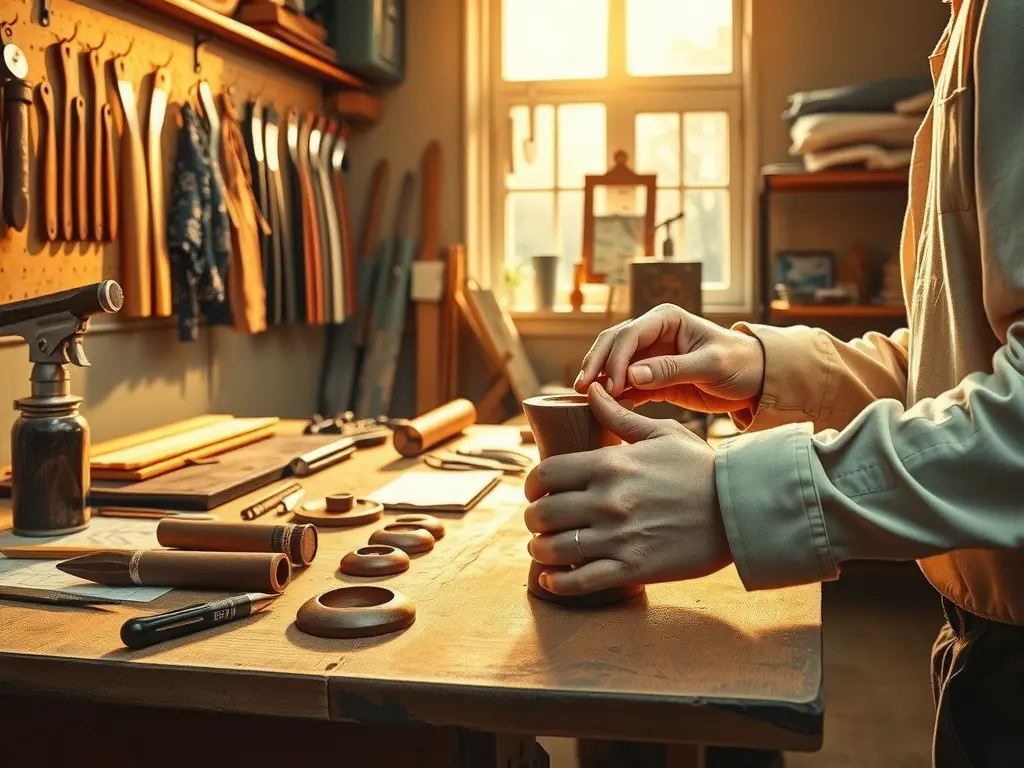
The subtle act of holding onto an everyday object can reveal a world of differences in user experience, making it crucial for manufacturers to pay attention to the intricate details of product design.
A poorly designed handle can lead to discomfort and frustration, reducing user satisfaction, while a well-crafted one can make all the difference in user engagement.
For instance, a study found that 75% of users abandon products with uncomfortable handles, highlighting the significance of prioritizing product development with ergonomic principles in mind.
When it comes to tactile surfaces, the material used can impact user comfort by up to 30%, with some materials offering better traction and control than others. Research suggests that users prefer handles with a diameter of 1-2 inches, and incorporating textured surfaces can elevate ergonomics, grip comfort, and handle design to create user-friendly grips with tactile surfaces.
Understanding Ergonomics For Handles
The design of handles is a delicate balance between form and function with a particular emphasis on creating a comfortable and secure handhold that makes a significant difference in user experience.
When designing handles, understanding the science of comfort and performance is essential to create user-friendly products that reduce hand fatigue.
The study of ergonomics focuses on designing and arranging things to minimize strain and discomfort, taking into account factors that influence human performance and comfort.
In ergonomic handle design, anthropometric data, which includes measurements of the human body, plays a significant role in determining the optimal handhold size and shape.
It helps designers create handles that fit comfortably in the user’s palm, reducing the risk of hand fatigue and discomfort.
Material selection is another critical aspect of ergonomic handle design.
A handle with a suitable grip texture provides sufficient grip and reduces the risk of accidents, while also enhancing palm support. The grip texture and handle shape were key factors in determining the ease of use, which was based on the handhold and palm support.

Impact of Grip Comfort on Usability
Designing products with comfort in mind is critical for creating a positive user experience, as it influences how long a user can interact with a product before feeling discomfort.
Human hands are uniquely adapted for delicate movements, not for clinging to objects, making comfortable grip design a vital element in usability.
The more time a user spends gripping an object, the greater the strain on their hands, leading to fatigue, pain, and decreased productivity.
Comforting a user’s hand is a significant aspect of product design since it directly affects their capability to use a product continuously without discomfort.
The manner in which users interact with products, including the application of grip forces, suggests that product design should integrate features that minimize strain over time. Grip forces continue to rise logarithmically as time increases, showcasing the need for designs to accommodate these changing forces over time. Grip features, such as nonslip surfaces, provide grip stability.
Key Points for Comfortable Product Design
- Human hands are adapted for delicate movements, not for clinging to objects, making comfortable grip design essential for usability.
- The longer a user grips an object, the greater the strain on their hands, leading to fatigue, pain, and decreased productivity.
- Grip forces continue to rise logarithmically as time increases, emphasizing the need for designs that accommodate changing forces over time.
- Nonslip surfaces provide grip stability and are a crucial feature in minimizing strain over time.
Key Features of Effective Handle Design
When a well-crafted handle meets the hand, user satisfaction and productivity skyrocket, setting the tone for a seamless interaction experience.
Optimal Shape Design for Easier Gripping
Research reveals that shapes with subtle tapers and angles improve grip alignment, allowing the user’s hand to mold naturally onto the handle, thus enhancing product usability.
Shapes that promote intuitive grip alignment provide a solid foundation for efficient finger positioning.
• Shapes that encourage adaptive grips
• Tapers and angles for securing a secure hold
• Optimal shape design for reducing finger strain
Key Textures for Sensory Feedback
Different texture elements provide vital cues for gripping and navigating, offering a clear tactile feedback for optimal hold efficiency.
This feedback helps reduce the risk of drops or misalignment, ultimately improving hold stability. Different texture elements for enhancing grip security, such as adaptive grips and finger positioning, can also provide cushioning for improved product usability and hold efficiency.
Enhancing Palm Support For Better Grips
For a product’s handle to truly feel comfortable and secure in a user’s hand, a well-designed grip can make all the difference. Effective grip design is a delicate balance between form and function, requiring a thoughtful consideration of several key factors.
A key aspect of achieving this balance is palm support, which plays a crucial role in preventing strains and discomfort during use.
Palm support is essential because it allows the palm to maintain contact with the grip, reducing the likelihood of the hand slipping or twisting.
This is particularly important with handle materials that are prone to causing fatigue and discomfort.
When palm support is lacking, users may experience discomfort, fatigue, and even long-term injuries like carpal tunnel syndrome.
This can be particularly true with lightweight design elements that can cause the palm to slip out of place, leading to a range of negative consequences. To design grips with effective palm support, manufacturers based their design on handle materials, lightweight design, functional aesthetics, grip width, and the softness factor.
Key Factors in Effective Grip Design
- Palm support is essential to prevent strains and discomfort during use, reducing the likelihood of the hand slipping or twisting.
- Lack of palm support can lead to discomfort, fatigue, and long-term injuries like carpal tunnel syndrome.
- Handle materials, lightweight design, functional aesthetics, grip width, and the softness factor are key considerations in designing grips with effective palm support.
- A well-designed grip can make a significant difference in the overall comfort and security of a product’s handle in a user’s hand.
Importance of Grip Texture in Comfort
The humble handle or grip can make all the difference in user comfort and control, with some textures providing a soft-touch that reduces fatigue and enhances overall performance.
The texture of a grip plays a crucial role in user experience, as it directly affects how we interact with objects.
Grip texture is indeed a vital design element that can make or break the user experience, and its impact is often overlooked until it’s too late.
Slip-resistant textures, such as rubber or textured plastics, prevent accidents by providing a secure grip even in wet or oily conditions.
This type of texture reduces the risk of slipping and falling, making it a crucial design element in many industries, particularly in healthcare, where durability can mean the difference between life and death.
The effects of texture on grip pressure and fatigue are well-documented. For instance, textured grips can distribute pressure evenly, thereby enhancing durability and reducing hand fatigue, while also providing a softtouch feel and performance enhancement due to the molded grips.
Custom Handles: A Tailored Approach
Grip performance can be significantly improved by tailoring handle design to an individual’s specific needs, thereby enhancing their overall interaction with products.
Immersive user experiences are often linked to grip tension, allowing individuals to interact with products with more precision and control.
When it comes to optimizing user experience, customization plays a crucial role in enhancing user engagement.
Master craftsmen and designers continuously seek to improve design aesthetics by incorporating ergonomic principles, resulting in a more comfortable and effective grip.
The biomechanics of handling products can be greatly influenced by the shape and size of the handle, directly impacting one’s ability to focus on the task at hand. One major advantage of custom handles is that they can be tailored to provide the perfect balance of grip power and comfort. By taking into account individual differences in hand size and shape, designers can create products with handles that offer a secure and satisfying grip, taking into consideration grip tension, user engagement, design aesthetics, biomechanics, and gripping power.
Key Points About Custom Handles
- Custom handles can be tailored to provide the perfect balance of grip power and comfort.
- The shape and size of the handle greatly influence the biomechanics of handling products.
- A secure and satisfying grip can be achieved by taking into account individual differences in hand size and shape.
- Custom handles can enhance user engagement and interaction with products by optimizing grip tension and design aesthetics.
Exploring Lightweight Design Benefits
Effective product design is all about subtle tweaks that have a significant impact on user experience, and nowhere is this more evident than in the arena of tactile feedback, where small concessions can lead to substantial improvements in usability and overall satisfaction.
Designers are placing a premium on ergonomic handle design due to mounting evidence of its numerous benefits, with one key advantage being the reduced hand fatigue that results from lighter handles.
* Users experience significant reductions in hand fatigue thanks to the decreased weight associated with ergonomic handles.
* Ergonomically designed handles reduce fatiguing grip pressures, thereby lowering the risk of accidents and injuries, a welcome bonus offered by such handles.
This benefit is crucial in preventing mistakes and boosting productivity while simultaneously diminishing hand fatigue. Research has shown that incorporating tactile feedback, handle customization, stress relief, mechanical design, and user interaction can greatly enhance the overall user experience.
Therapeutic Handles For Stress Relief
Incorporating thoughtful design elements into products has become increasingly vital in creating a supportive environment for individuals with diverse needs. For those who require additional assistance, the integration of therapeutic handles can significantly enhance user comfort and alleviate physical strain.
Among various design elements, textured surface patterns stand out for their ability to promote relaxation and reduce physical discomfort.
By incorporating ergonomic design principles, manufacturers can create products that cater to the specific needs of their users.
Therapeutic handles have gained significant attention in the field of stress relief thanks to their science-backed approach. These handles are designed to address both physical and emotional stress by promoting relaxation and reducing muscle tension.
By understanding the complex relationship between the human body and product design, manufacturers can create solutions that truly make a difference. Designing for User Comfort
The choice of materials and secure hold textures in therapeutic handles is critical in surface patterns, contouring, grip enhancement, secure hold, versatile handles that promote ease of use and minimize discomfort.
Design Elements for User Comfort
- Textured surface patterns can promote relaxation and reduce physical discomfort.
- Therapeutic handles can alleviate physical strain and enhance user comfort for individuals with diverse needs.
- Ergonomic design principles can create products that cater to the specific needs of users.
- Secure hold textures and materials in therapeutic handles are critical in promoting ease of use and minimizing discomfort.
Adjustable Reel Seats: Versatility in Rod Design

The humble fishing rod is a staple for any angler, but what often gets overlooked is the small yet crucial component that can greatly impact the overall fishing experience.
Fishing rods come in various lengths and materials, catering to different fishing styles and preferences.
For instance, a longer rod may be ideal for casting in open waters, while a shorter rod is better suited for navigating tight spaces.
Reel seats, on the other hand, are designed to accommodate various rod types and fishing techniques, providing a snug and secure hold for each.
Discover the secret to unlocking ultimate fishing gear versatility: adjustable reel seats that offer a high degree of customization, allowing anglers to tailor their fishing tackle to their specific needs. This versatility is particularly beneficial for anglers who frequently use a variety of fishing gear, including fishing rods with customizable reel seats and ergonomic designs that make it easier to handle different types of fishing tackle.
Understanding Adjustable Reel Seats
Fishing rods have evolved significantly over the years, with innovative designs and materials leading to improved performance and comfort for anglers.
Traditional reel seats were fixed, limiting anglers to a standard rod length and feel, but the of adjustable reel seats has changed this dynamic, allowing anglers to customize their rods to suit their needs and preferences.
Design innovations and engineering principles have played a crucial role in the development of adjustable reel seats, with manufacturers incorporating advanced materials to create rods that balance strength and flexibility, providing anglers with a more comfortable and controlled fishing experience.
Load transfer and energy distribution are critical components of adjustable reel seats, and scientific approaches have enabled engineers to optimize these aspects, resulting in improved rod performance and increased sensitivity for anglers. The use of lightweight materials in adjustable reel seats has also contributed to the development of composite rods, which offer a unique combination of strength, performance, and angler preference, in addition to variable length, made possible by lightweight materials, and accommodating different fishing techniques.

Benefits of Ergonomic Design
Fishing is an activity that requires a delicate balance of skill, patience, and physical endurance, making it essential for anglers to utilize equipment that complements their needs, rather than hindering them. Ergonomic design in reel seats has the potential to transform the way anglers interact with their gear, making fishing a more enjoyable and sustainable experience.
| Benefits of Ergonomic Design | ||||||||||||||||||||||||||||
|---|---|---|---|---|---|---|---|---|---|---|---|---|---|---|---|---|---|---|---|---|---|---|---|---|---|---|---|---|
| 1 | Reduced Fatigue | |||||||||||||||||||||||||||
|
By integrating curved lines and rounded edges, ergonomic reel seats allow for a more natural hand position, reducing pressure points and minimizing fatigue during extended fishing sessions. The design of the multipurpose equipment focused on adjustable components to allow for crafting with precision engineering, providing a balance between functionality and comfort grip. Benefits of Ergonomic Design
Customizing Your Fishing RodTransforming your fishing experience requires a deep understanding of the relationship between the angler and their gear, and one crucial aspect of this connection is finding the perfect fit for your rod. Introducing Adjustable Reel Seats These innovative seats offer a customizable fit that enhances the overall user-friendly design of the rod, streamlining setup for a more enjoyable experience. So, how do adjustable reel seats work? Simply put, they feature a sliding or rotating mechanism that enables anglers to adjust the reel seat to fit their needs, providing better stability and a more comfortable fishing experience. This adjustable design accommodates the angler’s hand and arm, allowing for a more precise and controlled cast. The benefits of adjustable reel seats are numerous, including improved casting distance, increased action sensitivity, seamless tackle integration, a user-friendly design, streamlined setup, and enhanced stability. Performance and Casting DistanceEffective fishing depends on mastering the art of long-distance casting, where the right rod is crucial for landing a catch. Modern rod design incorporates adjustable components that allow anglers to fine-tune their gear for maximum performance and versatility. Understanding these adjustable components is key to unlocking the full potential of your fishing rod. They are crafted from high-strength materials like graphite and fiberglass, enabling a modular design that can be tailored to specific angling styles and applications. The casting distance of a rod is greatly influenced by its ability to make quick adjustments, which adjustable components provide. By fine-tuning their rods, anglers can extend their casting range and increase their chances of a successful catch. The modular design of adjustable components makes it effortless to switch between different fishing applications, ensuring that anglers can adapt to any situation. Thanks to its quick adjustments, modular design, high-strength materials, adaptation to various angling styles, diverse fishing applications, and overall versatility, this versatility is a significant advantage in the world of fishing. Key Features of Modern Fishing Rods
The Role of Lightweight MaterialsAdvances in fishing rod customization have led to a surge in precision engineering, resulting in enhanced angling experiences for enthusiasts. Lightweight materials have become a crucial component in reel seat construction, enabling manufacturers to create rods that are both sensitive and manageable. Lightweight materials are designed to minimize weight while maintaining mechanical strength and durability. These materials are typically used in reel seat construction to reduce the overall weight of the rod, allowing for increased sensitivity and handling. By incorporating custom fittings, manufacturers can optimize the performance of their rods. Some common examples of lightweight materials used in reel seat construction include: When a rod is lighter, it allows for better alignment with the fish, enabling anglers to detect even the slightest bites. The custom fittings, efficiency, alignment, adaptive features, tackle systems, and enhancement made the product highly effective. Integrating Fishing Tackle SystemsFor anglers seeking to unlock the full potential of their fishing experience, understanding the intricacies of tackle systems can be a game-changer. A well-crafted tackle system is only as strong as its weakest link, and when it comes to fishing rods, the reel seat can be that crucial component. When it comes to tackle systems, a crucial component is the reel seat, which connects the reel to the rod and enables anglers to confidently cast and reel in their catch. With a focus on improving functionality, fishing rods have evolved to accommodate various fishing styles and techniques. Most fishing rods are available in fixed reel seat configuration, limiting anglers to specific fishing styles and techniques. Adjustable reel seats have revolutionized the world of fishing by providing anglers with an unprecedented level of adaptability. Mechanical advancements and innovative designs have led to fishing rods with adjustable reel seats that allow for easy adjustments in configuration, provide maximum adaptability, ensure enhanced functionality, accommodate a variety of accessories, offer different options, and a stable balance point. Key Benefits of Adjustable Reel Seats
Techniques for Quick AdjustmentsFine-Tuning Your Fishing Edge In the fast-paced world of competitive fishing, even the smallest improvements can make a significant difference. A perfectly adjusted reel seat can be the deciding factor between a triumphant catch and a disappointing miss. By mastering the art of quick adjustments, anglers can unlock new levels of efficiency and effectiveness on the water. Understanding the nuances of reel seat designs is crucial in fine-tuning rod performance. For example, spinning rods often feature fixed seats, while baitcasting reels employ adjustable seats with sleek, snap-on designs that appeal to the most discerning anglers. When looking to upgrade, consider the innovative advantages of new materials and designs that can enhance cast accuracy and sensitivity. Upgrading reel seats with cutting-edge components can significantly boost a rod’s overall performance. Swapping out old screws and spacers for advanced materials can lead to a more precise and innovative fly rod design with improved aesthetics and enhanced spinning rods and baitcasting capabilities. Exploring Versatility in Rod DesignFishing rods with modular design have revolutionized the angling experience by offering a level of customizability and flexibility not seen before. With the ability to change components to suit different fishing conditions, anglers can now tailor their experience to match the demands of their target species, water conditions, and personal preference. This means anglers can switch to heavier or lighter components to target different species, or in different water conditions. For example, a saltwater angler can switch to a heavier rod tip to handle the fight of a large game fish, while a freshwater angler can opt for a lighter rod to catch smaller species. The possibilities are endless, and the ability to adapt is what makes modular rods so appealing. Through component interchangeability, rod manufacturers can offer a broader range of products with multiple configurations. By combining the principles of dynamics, optimization, component interchangeability, technology, flexibility, and ergonomics, engineers can develop innovative solutions. Modular Fishing Rod Benefits
Using Exotic Woods for Reel Seats
The art of fishing has long been a staple of leisure and recreation, with enthusiasts constantly seeking ways to elevate their experience. Fishing enthusiasts are constantly seeking ways to elevate their experience, and one key area of focus is the customization of their gear. Exotic hardwoods offer a unique visual appeal and exceptional durability, making them an attractive option for those looking to upgrade their fishing equipment. These hardwoods provide resistance to wear and tear, ensuring that your fishing gear remains in top condition even after extensive use. They also enhance the overall look and feel of handcrafted fishing gear, making each piece a prized possession for any angler. Exotic woods can increase the resale value of custom reel components, making them a savvy investment for those who plan to upgrade and add a touch of luxury to their handcrafted fishing gear. Choosing Exotic Woods for Reel SeatsThe art of fishing has evolved significantly over the years, with anglers now seeking not only to reel in the big catch but also to showcase their individuality through their gear. One aspect that sets top-notch fishermen apart is their reel seats, crafted with unique materials that combine performance and style. A major trend in the fishing industry is the use of hardwood components, particularly in the construction of reel seats. Exotic woods like ebony and rosewood possess exceptional density and hardness, making them ideal for withstanding the rigors of the water. This density translates to increased durability and resistance to wear and tear, ensuring that the reel seat remains in top condition even after extended use. Beyond their functional benefits, these hardwood components also contribute to the overall aesthetic appeal of the fishing rod. The natural color and grain pattern of the wood can create a visually striking contrast that enhances the rod’s ergonomic feel and overall mahogany craftsmanship.
Types of Exotic Woods in Reel DesignFor anglers seeking a unique experience that combines form and function, the use of exotic woods in reel design offers a lightweight and ecofriendly option that sets them apart from the crowd. Exotic woods have been used in reel design for centuries, and their unique properties make them an attractive option for anglers seeking to upgrade their high-performance reels. Brief History of Exotic Woods in Reel Design Exotic woods have been used in reel design for centuries, with various species being introduced to the market over the years, making them a popular choice among anglers. Rosewood is a popular choice among reel manufacturers due to its lightweight mounts, decorative inlays, natural patterns, high-performance reels, unique experiences, and eco-friendly options.
Handcrafted Fishing Gear and Customization The art of fishing has evolved significantly over time, with anglers continually seeking innovative ways to improve their craft and the tools that accompany it. The tradition of handcrafting fishing gear dates back centuries, where anglers create one-of-a-kind tools tailored to their specific needs and preferences through tackle customization. A testament to this dedication is the incorporation of durable attachments made from various types of wood, including tropical woods like ebony and rosewood, which are prized for their exceptional durability and resistance to wear. In addition to their rugged nature, handcrafted gear often incorporates other features designed to secure longevity and ensure a precise fit. Understanding the underlying materials and techniques, such as artisanal craftsmanship, tackle customization, durable attachments, tropical woods, reel innovation, and reclaimed usage, enables the creation of high-quality fishing rods. The Role of Sustainability in Wood Selection As the fishing industry continues to evolve, it’s clear that the choice of wood for fishing gear is no longer just about functionality, but also about the environmental and social impact of that choice. Sustainable sourcing refers to the practice of obtaining wood from forests that are managed to maintain their ecological health and economic viability. This involves responsible forestry practices, such as reforestation, selective logging, and avoiding the harvesting of old-growth or endangered species. The goal of sustainable sourcing is to ensure that the wood products are harvested at a rate that does not harm the environment or deplete the resource. Conservation of biodiversity and habitat preservation are significant benefits of sustainable wood sourcing. By maintaining healthy forests, sustainable wood sourcing helps to provide weatherresistant finishes, versatility in design, the option for personalization, access to vintage sourced materials, the opportunity to make engraving choices, and gear of higher quality. Facts About Sustainable Wood Sourcing
Enhancing Rod Aesthetics with Unique FinishesThe pursuit of the perfect fishing rod is a journey that combines technical precision with personal expression. Unique rod finishes can elevate the overall fishing experience, adding an element of customization to what is often a highly technical sport. In the world of rod crafting, wood is a popular choice for its aesthetic appeal and durability. Various types of wood are used for rods, including hardwoods like ebony and maple, and softwoods like pine and cedar. Exotic woods like snakewood and burl are also prized for their smooth grain pattern and vibrant color. Customization and personalization is where the true value of unique finishes shines. By matching rod and reel seat colors, anglers can create a cohesive look that enhances the quality artistry of the gear. Quality artistry in reel seat materials and designs can also improve performance, as certain materials can help reduce friction and noise during smooth casting. Corrosion Resistance and Wood TreatmentsWood degradation in marine environments poses significant challenges to fishing gear durability, where a wood’s aesthetic integrity plays a critical role in extending the lifespan of equipment. The risk of water damage in these environments necessitates the use of durable and long-lasting materials, particularly in critical components such as rods that require innovative features for optimal performance. Treatment Types and Their Effects Wood treatments can be categorized into three primary types: chemical, mechanical, and biological, each offering a diverse tactile experience. Chemical treatments involve the use of silicates, silicones, and waxes to enhance durability and corrosion resistance. These chemicals provide physical and chemical properties that improve resistance to marine conditions, thereby ensuring a wood’s aesthetic integrity. The innovative features of custom rods with hardwood aesthetics and tactile experience provide a superior corrosion resistance and aesthetic integrity that surpasses traditional materials. Wood Degradation in Marine Environments
The Art of Craftsmanship in Reel SeatsThe art of crafting reel seats from exotic woods is a testament to human ingenuity, where skilled artisans bring together technical precision and creative flair to create a harmonious union of form and function. Crafting reel seats from exotic woods requires a unique blend of technical skill and artistic flair, where every detail matters in creating a piece of functional art that meets the highest standards of quality. In this delicate dance between creator and material, a master craftsman can coax a rich patina from even the most temperamental wood, imbuing each piece with a sense of warmth and character. Craftsmanship plays a vital role in reel seat creation, as it ensures that every component is meticulously crafted to provide a precise, hand-selected fit and a premium user experience. Marine-grade coatings and artistic designs become an integral part of the reel seat’s DNA, elevating it from mere functionality to a statement that showcases the custom fit, handselected woods, and unique grain patterns that set it apart. Innovative Features in Reel Seat Design.Reel seat construction has evolved into an art form, blending precise engineering with functional beauty to create an unparalleled fishing experience. Advancements in materials and craftsmanship have led to the development of unique reel seats that not only enhance the angler’s experience but also showcase artisanal craftsmanship. One key innovation is the use of unconventional materials, such as rare woods and advanced composites, which provide exceptional durability and aesthetic appeal, taking rod integration to new heights. Wood selection plays a crucial role in reel seat construction, with different species offering varying levels of durability and visual appeal, allowing anglers to add a touch of outdoor gear personality to their rods. Ergonomic features have also taken center stage, with designers focusing on creating reel seats that prioritize angler comfort and ease of use, making tackle design a true enabler of the fishing experience. The integration of advanced materials and technologies has further enabled rod integration, ergonomic features, functional beauty, and tackle design in outdoor gear. Reel Seat Construction Advancements
Why Thread Wrap Reel Seats?
When it comes to upgrading the look and feel of a fishing rod, one of the most noticeable components is the reel seat. A high-quality reel seat can make a significant difference in the overall appearance and performance of the rod. Tackle installation requires careful selection and installation of fishing rod components to ensure durability and performance. The installation of a hidden thread design, in particular, involves several steps that require attention to detail. For a successful installation, preparation and materials are crucial. This includes selecting the right thread and materials, as well as understanding the necessary tools and equipment required for rod building. A good thread wrapping technique is essential for a professional-looking finish. This involves wrapping the thread at the correct tension and using the right reel attachment to achieve a smooth and consistent installation of tackle. Understanding Fishing Rod ComponentsA well-crafted fishing rod is a symphony of precision engineering and thoughtful design, with each component working in harmony to deliver a seamless angling experience. A fishing rod’s performance hinges on the intricate relationship between its various parts. To begin with, let’s explore the reel seat, which serves as the foundation of the rod. The reel seat is a critical component that connects the reel to the rod, providing a stable base for the angler to cast and reel in their catch. Reel Seat Types and Materials
Selecting The Best Reel Attachment Precision engineering plays a vital role in designing a reel seat that delivers exceptional performance and comfort.** A well-designed reel seat can make a significant difference in how enjoyable the fishing experience is. A proper reel seat installation ensures a secure fit, reducing wear and tear on the reel. This is especially important for high-performance applications, where a secure fit can make all the difference in performance enhancement. The type of materials used in the reel seat, such as lightweight materials, also contribute to improved performance and maneuverability. When choosing a reel seat, consider the type of fishing you’ll be doing. Different reel seats are designed for specific types of fishing, and identifying key features for optimal reel compatibility is essential. Ensuring a proper balance between lightweight materials, carbon fiber, fiberglass, precision engineering, ergonomic features, and performance enhancement. The Importance Of Thread WrapsThread wraps play a pivotal role in ensuring the stability and appearance of a secure connection, thereby influencing the overall performance and longevity of the assembly. By optimizing thread wraps, one can significantly enhance the aesthetic appeal and structural integrity of a joint, sparking a profound impact on the overall reliability of the structure. Uncovering the Aesthetic Dimension Thread wraps enable the user to visually evaluate the fit and performance of the rod, providing an intuitive understanding of the rod’s performance capability, even from a distance. Thread wraps significantly enhance the durability and stability of a connection by improving the rod’s resistance to corrosion, particularly in saltwater environments, where regular maintenance can be challenging, but with the right thread, freshwater gear and reel compatibility can also be maintained with ease and secure knots can be tied with confidence. Techniques For Hidden Thread DesignIn fishing rod construction, the subtle nuances of design often make all the difference between a functional piece and a true work of art. The appearance of a fishing reel seat can greatly impact the overall aesthetic appeal of a rod, setting it apart from a simple, unfinished product. When it comes to building a fishing rod, one of the most critical components is the reel seat. Employing effective techniques ensures that your reel seat looks professional and polished, which is essential for any serious angler. An essential aspect of a hidden thread design is selecting the right thread for the job, taking into account its weight, color, and type. For a seamless appearance, it’s crucial to consider the type of thread that matches or complements the surface of the reel seat. This is especially important when working with different materials, as the thread must adhere correctly to ensure a long-lasting aesthetic appeal with a strong adhesive bonding that withstands the thread tension and is preserved by fast curing epoxy and varnish finishes. Key Considerations for a Professional Reel Seat
Tips For Tackle InstallationProperly constructed tackle works in harmony with the rod to produce a seamless fishing experience. A good tackle installation is not just about making your gear look good, it’s also about ensuring that it performs flawlessly and lasts long. When done correctly, it can be the difference between landing the big catch and losing it. Choosing the right thread type is a tackle essential that plays a significant role in the overall performance of your setup. Consider the type of fishing and the environment in which you’ll be using your gear. Fast-moving water, for example, requires a strong thread that can withstand the currents and abrasions of the rod blank. On the other hand, a gentle flow might require a more delicate thread that won’t damage the line guides. Experiment with different thread types to find the one that best suits your needs. Some common thread types include monofilament, fluorocarbon, and nylon. Exploring Epoxy Coating BenefitsThe role of epoxy in ensuring a strong and durable connection between components. A fishing rod is subjected to significant stress and wear during casting and retrieval, and its durability is critical to a successful fishing experience. Understanding the Importance of Durability A rod that can withstand the rigors of the water and the tackle it’s handling is essential for a enjoyable and successful fishing experience. By minimizing the risk of breakage and damage, anglers can focus on mastering their balancing techniques and reeling in the big catch. The Science Behind Epoxy Coating makes it ideal for tackling fishing rod repair and upgrading, which is a must for fishing enthusiasts and angler upgrades who want to showcase unique designs with epoxy-coated tackle crafting techniques. Key Benefits of Epoxy Coating for Fishing Rods
Custom Assembly For Performance RodsHigh-quality fishing rods demand meticulous craftsmanship to unlock their full potential. A precision-crafted rod can make all the difference in a successful fishing trip, offering a more enjoyable and rewarding experience for anglers. The delicate balance of rod components is crucial for optimal performance. A poorly assembled rod can lead to reduced sensitivity and water resistance, ultimately affecting the outcome of your fishing trip. When selecting a reel seat, consider the type of fishing you will be doing and the size of the reel you plan to use. Different types of reel seats, such as fixed and sliding reel seats, offer varying levels of flexibility and adjustability, allowing for better line management. Installing a reel seat requires attention to detail and the right tooling equipment. Begin by aligning the reel seat with the rod blank, ensuring a secure and precise fit. Next, apply precision tools to secure the thread wrapping techniques. Innovations In Fishing Gear Design Recent breakthroughs in materials science have revolutionized the angling crafts industry, allowing for the creation of performance rods that are both highly sensitive and incredibly durable. For instance, the development of carbon fiber and other lightweight materials has improved the overall performance of rods, making them more responsive to subtle bites and allowing anglers to land even the most elusive catches. The Evolution of Materials Science Breakthroughs Key Breakthroughs in Materials Science
Customizing Reel Seats for Comfort and Style
Transforming your fishing experience starts with a solid foundation – a comfortable grip that sets the tone for a successful day on the water. Maintaining a consistent and comfortable grip is crucial for any fishing enthusiast, as it directly affects the entire fishing experience and can significantly impact your ability to cast accurately. Fishing gear customization is more than just a matter of aesthetics, it’s about creating a functional and personalized tool that enhances your fishing experience. By tailoring your reel seat, specifically the ergonomic design, to your specific needs and preferences, you can reduce fatigue and improve your overall performance on the water. When it comes to style enhancements on your fishing gear, a well-designed reel seat can make a big difference in your fishing success. Investing in a high-quality reel with an ergonomic design, personalized fittings, comfort modifications, reel seat grips, and style enhancements is essential for a successful fishing experience. Choosing The Right Reel Seat GripsFor anglers seeking to elevate their fishing experience, a crucial aspect of tackle customization lies in selecting the right handle materials, which can significantly impact the overall comfort and control of the rod. When selecting a grip, consider the material’s durability and ability to withstand wear and tear. TPE (Thermoplastic Elastomer) grips are soft, pliable, and resistant to abrasion, making them a top choice for many anglers who prioritize rod stability. Rubber grips, on the other hand, are durable, shock-absorbing, and easy to clean, ideal for those who prioritize hygiene and aesthetic upgrades. Synthetic grips are lightweight, corrosion-resistant, and easy to maintain, appealing to anglers seeking a low-maintenance option. Ergonomic considerations are also crucial in choosing the right reel seat grip. Grip size and shape should accommodate different hand sizes and shapes, handle materials, and aesthetic upgrades to provide a customized angling experience that enhances rod stability with lightweight components.
Selecting Ergonomic Design FeaturesIn an ideal world, every fisherman would have a customizable grip that fits their individual hand shape perfectly, promoting comfort and reducing fatigue. This perfect harmony between the hand and the grip is crucial for a successful fishing experience, where the last thing a fisherman wants is to be distracted by discomfort or pain. Proper Hand Positioning: By positioning your hands correctly, you can maintain a steady grip on the rod and reel, allowing you to focus on the thrill of the catch. Appropriate grip size is paramount to minimize strain on your hands. When choosing a grip, consider the contours of your hand and choose a size that fits your palm snugly, providing a comfortable fit that won’t compromise your fishing experience. When exploring grip materials, it is crucial to consider premium finishes, user-friendly adjustments, balance optimization, performance improvement, custom finishes, and fishing aesthetics to create a truly exceptional rod. Key Points for a Comfortable Fishing Experience
Customizing With Aesthetic UpgradesPersonalization has become a defining aspect of the angling experience, with many enthusiasts taking pride in their unique equipment and the stories it tells about their identity. Anglers’ preferences often extend far beyond the practical functions of their gear to encompass the aesthetic appeal, reflecting their individual style and personality. For instance, some anglers swear by grip technology for enhanced control and comfort, while others opt for fashionable designs that mirror their personality. Reel ergonomics also play a crucial role, as a well-designed handle can significantly reduce fatigue and improve casting accuracy. A carefully chosen reel seat, with its blend of materials and designs, is an integral part of this equation. When selecting materials for a customized reel seat, anglers must balance durability and performance. Certain materials may prioritize improved grip or reduced fatigue, potentially at the expense of aesthetics, while others may focus on modern and fashionable designs in order to cater to anglers’ preferences through reel ergonomics, grip technology, adjustable features, and innovative rod construction. Ensuring Rod Stability With Custom FinishesA smooth casting experience is key to landing a catch, and achieving this relies heavily on the stability of the rod itself, which is deeply intertwined with the overall performance of the reel mounting system. The role of stability in the reel seat is multifaceted, as it serves to minimize vibrations and provide a solid foundation for the reel, thus reducing the likelihood of wobble and increasing accuracy. A stable reel seat also enables the angler to make precise casts with greater ease. Intuitive handling is critical in this process, as it allows the angler to execute casts with confidence and accuracy. Balance optimization is a critical factor in achieving better casting performance, involving the even distribution of weight between the rod and reel, which reduces strain on the arm and facilitates more precise casts. A well-balanced rod and reel also ensures that the user experiences reduced fatigue. Enhanced grip is provided by the high-quality materials. Key Factors for a Smooth Casting Experience
Exploring Adjustability In Reel CustomizationThe right rod sensitivity is crucial to a satisfying fishing experience, but it’s not the only factor at play. Lightweight construction of rods has been a significant improvement in recent years, making it easier for anglers to maneuver their gear. Even with these advancements, a significant issue has remained – a lack of adjustability in reel seats. Customizable gear has long been a hallmark of high-end fishing equipment, and now it’s becoming more accessible to anglers across the board. By incorporating adjustable reel seats, manufacturers have taken a significant step towards creating more personalized fishing experiences. This allows anglers to tailor their sensitivity to suit their own unique needs, resulting in improved performance and a more enjoyable experience on the water. Ergonomic design plays a critical role in this development, with manufacturers incorporating features such as custom colors and lightweight materials to make adjustments more intuitive. These fishing rods are made with great performance, come in custom colors, include personalized gear, have a lightweight construction, very good rod sensitivity, and come with stylish accessories. Tailoring Comfort Modifications For Angler PreferencesComfort is a crucial aspect of the fishing experience, with a significant impact on an angler’s overall enjoyment and performance. Adapting Reel Seats for Optimal Fit. A key comfort modification is the adaptation of reel seats to fit individual anglers’ hands, with unique grips providing a secure hold, while sensitive hands may prefer thinner, more compact seats, and those with larger hands may benefit from thicker, contoured seats. Materials Matter in Reel Seat Construction. Soft, cushioned materials with advanced engineering provide added comfort and support, but durability and maintenance considerations are also crucial, and some anglers may prioritize aesthetic appeal over functionality, while others may focus on functional design. Adjustability in reel seats is key to providing anglers with a functional design that offers unique grips for optimal control and comfort during use.
Understanding The Role Of Handle MaterialsThe art of crafting a seamless fishing experience begins with a thoughtful consideration of handle materials, where the interplay between comfort, control, and sensitivity comes into focus. Exploring the world of handle materials is an essential aspect of fine-tuning your fishing setup to deliver a tailored experience, where every angler’s comfort and style are seamlessly integrated. When selecting a handle material, the quality of the grip plays a pivotal role in ensuring adequate control, and a keen sense of sensitivity that guides your fishing technique with precision. Among the array of materials available, wood is renowned for its exceptional durability, while graphite excels in its sensitivity and feedback, making it an essential component for anglers who demand a high-performance experience. Traction-enhancing materials such as textured finishes, ridges, and patterns are strategically designed to provide a secure grip, even in the most unforgiving conditions, with custom shapes, ergonomic grips, specialized components, tailored to deliver an angler comfort, while integrating style. Incorporating Unique Grips For Enhanced Performance.Fishing has evolved significantly over the years, with innovative designs emerging to enhance the overall experience. A perfectly crafted grip can transform your fishing experience, allowing you to feel even the slightest bites and land more fish with confidence. The use of advanced materials in grip design has led to improved durability and reduced fatigue for anglers. For instance, Scott Fly Rods’ new grips last up to 2x longer when compared to traditional cork or wood, thanks to the use of graphite and carbon fiber combos. Ergonomic solutions have become increasingly popular in fishing innovation, allowing anglers to hold onto their rods for extended periods without experiencing discomfort. High-modulus graphite, rubber, and other materials have been incorporated into grip designs for better performance and longevity. These materials provide added resistance against harsh weather conditions and rough handling, making them ideal for practical applications. Whether you’re a seasoned angler or just starting out, Anging Gear is the perfect destination for anyone who appreciates innovative designs, fishing innovation, practical applications, custom style, ergonomic solutions, and fishing comfort. Fishing Innovation Facts
Micro Guides: Advantages and Installation
Adopting the right installation techniques is pivotal in unlocking the full potential of various equipment, ensuring seamless performance and extended lifespan. In fields where precision is paramount, the reliance on accurate mounting solutions has become increasingly important. Linear motion systems, such as micro guides, have emerged as game-changers in recent years. The advantages of utilizing micro guides are multifaceted:
Guide Placement: Static Distribution Method
Achieving broad visibility for your message demands a strategic approach to identifying the most relevant channels for reaching your target audience. A well-executed distribution strategy is crucial for promotional materials, as it greatly impacts their success. This involves understanding the target audience and their preferences to effectively engage them. Resource optimization plays a significant role in effectively allocating distribution channels to reach your audience, allowing you to pinpoint the most effective placement techniques. When evaluating the effectiveness of a distribution method, you need to consider key areas such as understanding audience demographics and behavior, which in turn helps with static allocation. For optimal results, consider spatial arrangement to ensure your message reaches the right people at the right time, thus enhancing the overall distribution strategy. In order to maximize reach and exposure, it’s essential to employ a strategic static allocation, distribution strategy, placement techniques, spatial arrangement, and resource optimization. Understanding Static Allocation MethodsIn the realm of computer science, a crucial aspect of resource management lies in how assets are allocated and organized, influencing the overall system’s efficiency and user experience. Static allocation is a fundamental concept where resources or assets are allocated at compile-time or configuration, rather than during run-time. This approach has far-reaching implications for distribution efficiency and user experience. When applied correctly, it can lead to significant improvements in spatial distribution, fixed positioning, and resource management, making it an essential consideration for developers. Understanding Static Allocation MethodsDefinition of Static AllocationStatic allocation involves pre-allocating memory blocks, which can be seen in pre-initialized objects, and shared resources accessible across all scopes or modules. This systematic placement of resources has several implications on the overall operational efficiency and flexibility of the system.
Effective Distribution Strategy ImplementationA well-crafted distribution strategy is the unsung hero of many successful businesses, laying the foundation for a strong brand presence and revenue growth. By striking a delicate balance between resource allocation and user needs, companies can create a distribution framework that resonates with their customers and sets them apart from the competition. Layout Strategy Plays a Crucial Role. A business’s distribution strategy is a critical component of its overall marketing plan. Effective distribution strategies can make or break a company’s bottom line, and there are three primary types of distribution strategies: Push, Pull, and Hybrid. Push distribution involves forcing products onto customers through various channels, while Pull distribution encourages customers to pull products towards them. Hybrid distribution strategies combine elements of both Push and Pull distribution. Arrangement techniques influence distribution outcomes through the effective implementation of layout strategy, placement optimization, static methodology, and distribution framework. Key Elements of a Distribution Strategy
Placement Techniques for Maximum ImpactEffective communication hinges on a well-planned visual arrangement, where every element serves a purpose in capturing the audience’s attention and conveying the message. To unlock maximum impact, designers and communicators must delve into the realm of placement strategies, where the art of positioning elements comes into play. In crafting a visual hierarchy, it’s essential to employ a resource allocation plan, guiding the viewer’s attention through a deliberate arrangement of visual elements, much like a pyramid where the most crucial information sits atop. Categorizing and grouping related elements using planning distribution techniques allows for clarity and organization, akin to sectioning off different areas of a layout. The strategic allocation of typography and color plays a vital role in conveying meaning and emotional resonance, as they can either reinforce or detract from the message being conveyed. Careful consideration of spatial strategy is crucial in balancing the composition, ensuring that the viewer. Spatial Arrangement in DistributionThe way products are placed in a retail environment can have a profound impact on customer behavior and decision-making, ultimately affecting overall sales and customer satisfaction. In the context of retail and beyond, the deliberate placement of products or services in a way that facilitates navigation, access, and engagement is a critical aspect of distribution. This approach is essential in various settings, including retail, exhibitions, and events. Effective structured placement can enhance accessibility by guiding customers through a clear and logical flow, reducing confusion and frustration. In contrast, poorly designed spaces can hinder navigation, leading to a negative customer experience. A well-thought-out allocation method of products can influence consumer behavior, encouraging customers to explore and interact with products. For instance, placing high-demand items at eye level or near checkout counters can increase sales and customer satisfaction. Strategic positioning of products is a guiding force in spatial arrangement, as it facilitates effective arrangement strategy, establishes a robust distribution network, ensures structured placement, and optimizes allocation methods. Key Points About Product Placement
Resource Optimization in Static PlacementEfficient allocation is key to unlocking business success, as it directly impacts productivity and revenue. Proper allocation of resources can lead to significant improvements in efficiency and overall performance. Understanding the Static Placement Model This requires careful consideration of resource availability, task requirements, and spatial organization to ensure that resources are utilized effectively. By optimizing resource distribution, businesses can streamline operations and improve productivity. Assessing Resource Utilization and Efficiency This involves evaluating how resources are being used, identifying areas of waste or underutilization, and determining the impact of distribution methods on overall performance. By analyzing resource utilization, businesses can pinpoint opportunities for improvement and develop targeted strategies to enhance operational efficiency. She placed high priority on resource distribution, spatial organization, optimization techniques, feature positioning, and data placement. Understanding Spatial Distribution FrameworksEffective management of physical spaces requires a thoughtful allocation strategy to ensure optimal use of resources. Defining Spatial Distribution Frameworks A spatial distribution framework is a systematic approach to organizing and allocating resources or staff across a physical space, thereby facilitating tactical placement and reducing waste. This approach ensures that resources are utilized effectively, minimizing waste and improving productivity by leveraging layout efficiency. Area-based systems also involve a systematic allocation strategy, which often supports tactical placement goals that result in a structured distribution. Benefits of Effective Spatial Distribution Frameworks
Fixed Positioning and Its BenefitsUtilizing a strategic spatial methodology in web design enables businesses to establish a clear visual flow that draws users’ attention and enhances their overall experience. By doing so, website visitors can develop a sense of trust and reliability that is essential for fostering meaningful connections. When it comes to navigating through a website, a consistent resource positioning plays a significant role in facilitating a seamless user journey, ultimately leading to improved user engagement and better conversion rates. This is particularly evident when elements such as navigation menus and calls-to-action are fixed in place, remaining unchanged despite user scrolling. A well-implemented spatial arrangement framework is crucial for businesses looking to establish trust with their online audience. By creating a consistent layout, website owners can convey a sense of professionalism and stability, which is vital for building lasting relationships with customers. From a logistics perspective, fixed positioning can also lead to improved distribution efficiency, allowing websites to optimize their resource positioning, distribution logistics, placement efficiency, spatial methodology, and arrangement framework. Strategies for Effective Resource ManagementProper management of resources is pivotal to the success of any static distribution method, as it directly affects the efficiency and quality of the overall process. Ultimately, the most effective static distribution processes rely on a well-structured approach to manage available resources efficiently. Here are the key strategies for achieving effective static distribution management: This involves identifying critical tasks and assigning the necessary resources to complete them, minimizing waste and maximizing output. Structured Resource Management This can be achieved through arrangement optimization, where tasks are rearranged to reduce unnecessary movement and increase productivity. Adapting to Changing Circumstances Effective Static Distribution Management Strategies
| ||||||||||||||||||||||||||||