
fishing-line-crafting-techniques
Creating Tapered Leaders for Fly Fishing
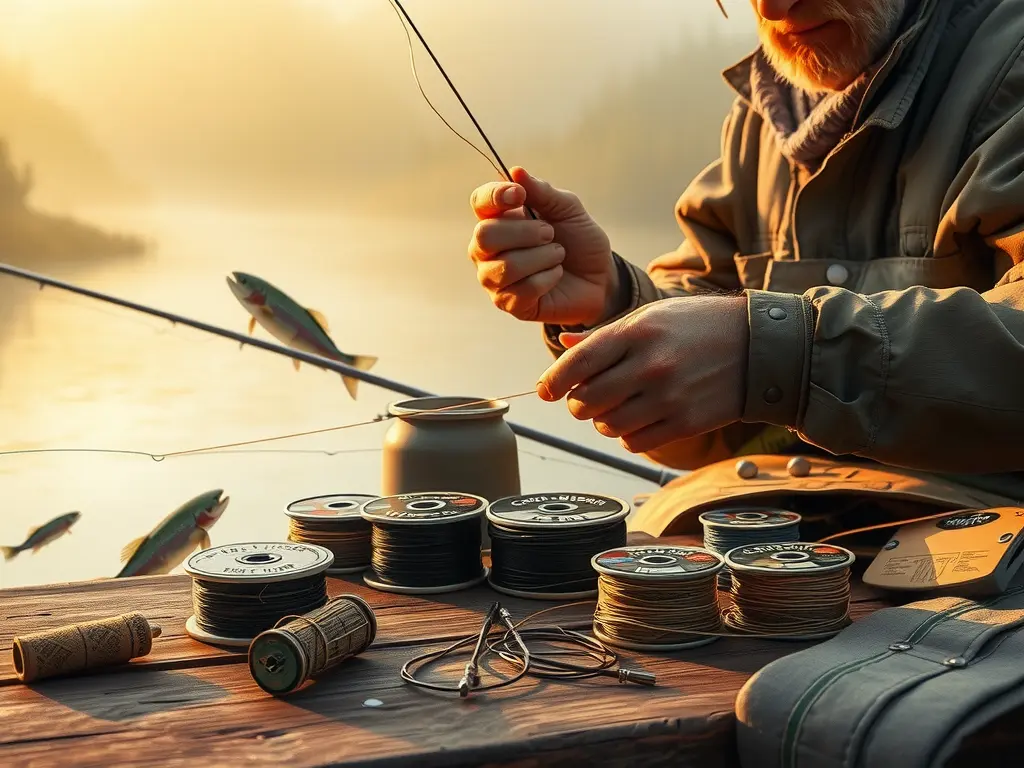
Anglers often find themselves struggling to land a fish, not because of a lack of technique or patience, but because of a poorly constructed lead-in to the actual tackle.
Fly fishing requires an intuitive understanding of the delicate balance between rod, line, and tackle to achieve a smooth casting motion and catch the elusive target.
Improper leaders can lead to poor casting, making it challenging for anglers to achieve their desired shot and ultimately resulting in a poor fishing experience.
Tapered leaders are a crucial aspect of fly fishing, as they help to distribute the weight of the line evenly, allowing for a more natural presentation of the fly. A well-tied monofilament leader is essential for this purpose, and can greatly improve the performance of a tapered leader.
Understanding Tapered Leaders
Mastering the Art of Fly Casting with Tapered Leaders The correct leader can make or break a fishing trip, and in fly fishing, the leader is the connection between the fly line and the fly. A well-designed leader is crucial for achieving a smooth presentation and optimal casting, which can be the difference between a successful catch and a disappointing day on the water.
A tapered leader is a length of monofilament or fluorocarbon line that is thinner at the end closest to the fly and thicker at the end closest to the fly line.
This tapered design serves two main purposes: to reduce line stiffness and to create a more delicate presentation of the fly, making it easier to present the fly to the fish with a floating line.
The benefits of using a tapered leader include improved drag reduction, increased accuracy, and a more natural presentation of the fly. A tapered leader helps reduce drag in fly casting by making it easier to present a floating line and a sink tip from a fishing tackle system.
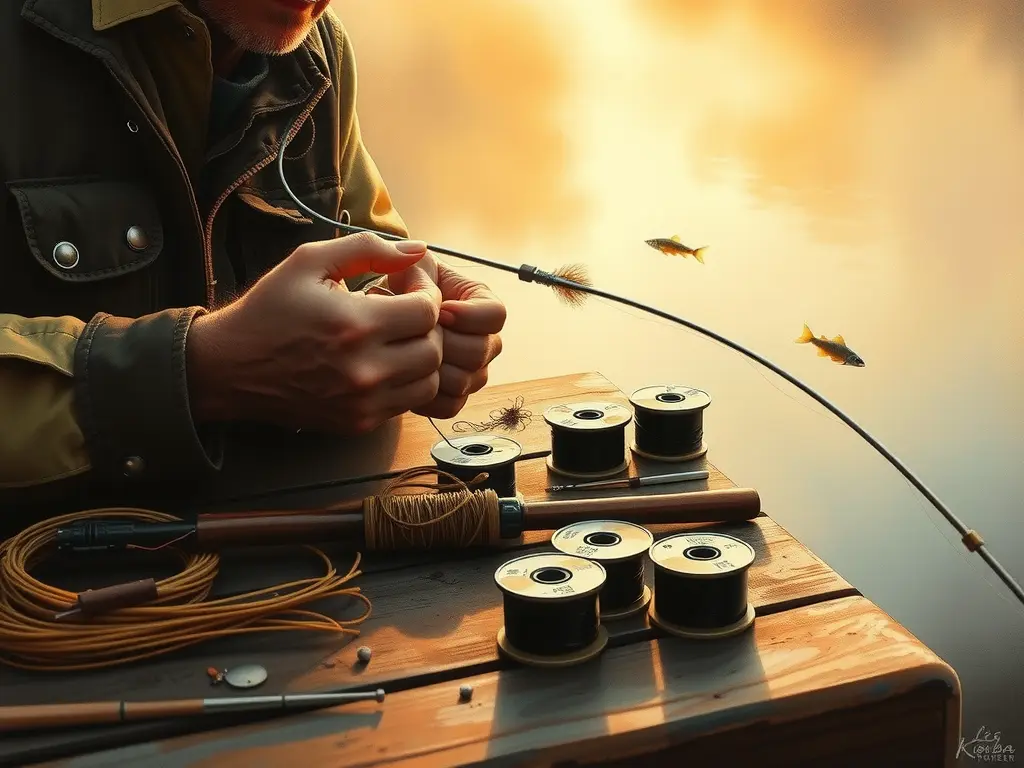
The Role of Leader Material
Crafting an effective leader for fly fishing requires a deep understanding of the nuances involved, as it directly influences the delicate presentation and accuracy of your fly patterns, which can make or break your fishing experience.
Understanding Leader Material Characteristics
Leader material characteristics include its diameter, strength, and stiffness, all of which significantly impact the overall performance of the line, particularly in terms of tippet diameter and knot strength.
A thicker leader material can potentially provide more strength, but may also reduce casting distance and affect the presentation of the fly.
For instance, when utilizing fluorocarbon leader material, it’s crucial to balance its benefits with the need for a precise tippet size. Monofilament leaders have been a popular choice for many anglers due to their ease of use and affordability, but they have some drawbacks, including a tendency to stretch and affect fly patterns, casting distance, leader material, knot strength, tippet, and butt section.
Leader Material Characteristics
- A thicker leader material can potentially provide more strength, but may also reduce casting distance and affect the presentation of the fly.
- Fluorocarbon leader material requires precise tippet size to balance its benefits.
- Monofilament leaders can stretch and affect fly patterns, casting distance, and knot strength.
- Leader material diameter, strength, and stiffness significantly impact the overall performance of the line.
Knot Tying Techniques
When it comes to the art of fishing, a small weakness in the line can spell disaster, making the importance of mastering knot tying techniques impossible to overstate, particularly when it comes to maintaining a consistent casting technique.
Understanding the Basics
The three main types of knots used in leader construction are the improved clinch knot, the barrel knot, and the blood knot.
When it comes to leader construction, knot strength and reliability are paramount to prevent line breakage and fish loss.
The Science of Tapered Leaders
Monofilament and fluorocarbon materials are both used in leader construction due to their durability and resistance to abrasion.
Tapering and segmenting a leader is essential for optimized presentation and improved casting distance. By casting with a fly rod and reel with a weight that is in line with the tip section of the fly rod and controlled by the fishing line weight, a skilled angler can increase their line turnover.
Optimizing Casting Distance
Casting distance in fly fishing is a delicate balance of skill, equipment, and technique, where even the slightest adjustments can greatly impact the outcome.
Effective fly fishing requires a deep understanding of the relationship between the caster, the rod, and the line, with a well-designed system allowing for a more stealthy presentation.
The tapered leader is a critical component of the fly fishing system, as it connects the fly line to the fly, and its design and construction can significantly impact the casting distance and accuracy of the cast.
Analyzing the relationship between line weight and water resistance, a well-designed tapered leader can help to reduce resistance and increase the distance of the cast.
When it comes to choosing the right line weight, it’s essential to consider the rod action and presentation, taking into account the catch-and-release implications of a successful cast. A line weight that is too heavy can put too much stress on the water, compromising stealth and strike detection in catch-and-release fishing technique.
Key Considerations for Effective Fly Fishing
- A well-designed tapered leader can help reduce resistance and increase casting distance by up to 20 feet.
- A line weight that is too heavy can compromise stealth and strike detection in catch-and-release fishing.
- The relationship between line weight and water resistance is critical in determining casting distance and accuracy.
- A rod action that is too stiff can reduce casting distance and make it more difficult to present the fly stealthily.
Drag Reduction Strategies
Finesse is the key to effective drift in various water conditions to achieve a seamless drift, precision is crucial when navigating through different fishing conditions. A key factor in this precision is reducing drag, which is particularly important in fly fishing where the tapered leader plays a vital role in minimizing resistance.
The tapered leader, typically made of a monofilament or fluorocarbon material, is designed to gradually transition from a thick main line to a thin tippet, allowing for a smooth presentation of the fly.
This smooth transition is critical in preventing drag and ensuring a drag-free drift.
Understanding the Role of Leader Taper in Drag Reduction
The leader taper is critical in reducing drag, as it allows the line to transition smoothly from the main line to the tippet, minimizing resistance and preventing drag. Proper leader taper can be achieved by using a monofilament or fluorocarbon tapered leader or by hand-tying a tapered leader based on the type of fly tying, required weight distribution, performance characteristics, fishing conditions, precision required, and finesse desired.
Selecting the Right Tippet
As a fly fisherman, you know that the subtle dance between you, the fish, and the water can be a delicate balance. The right tackle can be the difference between a strike and a missed opportunity.
Understanding the Role of Tippet in Fly Fishing
A tippet is the final section of monofilament or fluorocarbon line that connects the fly to the leader, typically ranging from 9 to 24 inches in length.
It’s an often-overlooked component of fly fishing, yet it plays a critical role in presenting the fly naturally to the fish, absorbing shock, and providing the necessary strength to land the catch.
Choosing the Right Tippet for Different Fishing Situations
When it comes to selecting a tippet, you must consider the balance between stealth and strength. A monofilament is often used as the backing line in rigging for fish species that have large sizes in aquatic habitats requiring larger terminal tackle for a complete casting stroke.
Tippet Selection and Fly Fishing
- A tippet typically ranges in length from 9 to 24 inches.
- Monofilament is often used as the backing line in rigging for fish species with large sizes in aquatic habitats.
- The tippet plays a critical role in presenting the fly naturally to the fish, absorbing shock, and providing the necessary strength to land the catch.
- Choosing the right tippet is a balance between stealth and strength.
Understanding Presentation and Turnover
The attention to detail varies widely among experienced fly fishers.
Leader presentation refers to the way the leader line interacts with the water, affecting the movement and visibility of the fly.
A properly presented leader can increase strike detection and catch rate by mimicking the natural movement of a rod action, which allows the fly to glide smoothly through the water.
The leader’s weight-forward taper and shooting head design can influence the presentation, with a weight-forward taper providing a more natural presentation and a shooting head allowing for deeper presentations with greater accuracy.
Turnover occurs when the leader line twists or turns, affecting the presentation and increasing the likelihood of a missed strike. Causes of turnover include improper casting technique, using a leader length that is too long, and using a shooting head that is too heavy for the floating taper of the rod action.
Matching Fly Patterns to Conditions
Fishing in a variety of waters requires more than just a solid grasp of fly choice – it demands an understanding of how water clarity, fishing strategy, and leader setup can come together in perfect harmony.
Read the Water
Analyze the fish’s behavior, water conditions, and structure to determine the ideal leader setup. A gentle current may call for a longer leader to float freely, while a tumbling torrent demands a shorter, more drag-free setup to withstand the shock of a tug from a large fish.
When it comes to dry fly fishing, floatability is essential – a scale-like pattern will sit more naturally on the surface than a large, heavy fly, helping to mimic the natural movement of hatching insects and increase the chances of attracting a bite. A well-balanced leader-to-leader connection to a well-designed fly choice will provide floatability, reduced drag, drag-free drift, effective line taper, and a suitable fishing strategy in water clarity.
| Water Clarity | Fishing Strategy | Leader Setup | Fishing Outcome |
|---|---|---|---|
| Clear | Drift with a gentle current | Longer leader | Increased chances of attracting a bite |
| Turbulent | Drift with a tumbling torrent | Shorter, more drag-free leader | Increased chances of catching a large fish |
| Surface Water | Dry fly fishing | Leader-to-leader connection for floatability | Natural movement of hatching insects |
Splicing Techniques for Stronger Lines

Mastering the art of joining fishing line segments can elevate your angling experience by preventing line failure and damage.
As an angler, you’ve likely experienced the frustration of a damaged fishing line.
To overcome this, it’s essential to learn effective line tying methods that ensure a strong and reliable connection.
Proper braided fusion techniques can significantly improve the performance and durability of your fishing lines, making them a crucial skill for anglers.
When it comes to fishing line methods, the condition and material of the line are just as important as the technique used. Monofilament, fluorocarbon, and braided lines all require unique connection methods to optimize their strength and reliability. To create a seamless connection, consider the key factors that impact line joining, such as knot tying, fishing line methods, braided fusion, and rope connection.
Understanding Splice Types
Fine-tuning the connection of a fishing line is essential to ensure a smooth fishing experience.>
Fine-tuning the connection of a fishing line is essential to ensure a smooth fishing experience. A critical factor in achieving this is understanding the different types of splices used in fishing lines.
When it comes to fishing, the type of splice used in a line can significantly impact its durability and performance, affecting the overall success of the fishing experience.
Splice Durability and Performance Factors
- Fiber to Fiber Splices
Fiber-to-fiber splices involve joining two similar fibers together, usually monofilament or fluorocarbon lines, creating a seamless connection. This type of splice is known for its high strength and resistance to water absorption, making it a popular choice for line reinforcement.

Benefits of Line Joining Techniques
In the quest for outdoor adventure, maintaining the integrity of lines and ropes is crucial to ensuring a smooth and enjoyable experience. One often-overlooked aspect of line durability is the impact of effective seam bonding techniques on preventing line failure.
Seam bonding techniques can significantly enhance the durability of lines by ensuring a strong and consistent bond between two or more strands.
In outdoor activities, a secure join is crucial to prevent damage from wear and tear.
A high-quality line joining technique is essential for optimal performance and longevity.
Effective line joining techniques provide several benefits, including improved line strength and reduced line failure rates.
In the context of outdoor activities, line strength is vital to ensure a smooth and enjoyable experience.
In many cases, line failure can result in costly repairs or even accidents, which highlights the importance of a reliable join. Analyzing the advantages of effective line joining techniques reveals significant gains in seam bonding, durability, secure joins, knot alternatives, and line integrity.
Advantages of Effective Line Joining Techniques Impact on Line Durability Improved Line Strength Reduces line failure rates Enhanced Seam Bonding Increases line durability Secure Joins Prevents damage from wear and tear Knot Tying for Secure Joins
The art of knot tying is a crucial aspect of fishing that can make or break a successful outing. A well-tied knot can mean the difference between reeling in a prized catch and losing a great opportunity, making it an essential skill for any angler to master.
When it comes to maintaining line integrity, the strength of a line can be compromised by various factors, including improper knotting, abrasive surfaces, and excessive wear and tear.
As a result, a secure join becomes the foundation of a reliable fishing line.
Understanding why proper knotting is crucial for line integrity is key to avoiding costly line failures that can occur due to knots not seated properly, incorrect knot size, and poorly tied terminations.
In order to create a secure join, anglers must be knowledgeable about various knot types that can be used for end-to-end connections. The double uni knot, for instance, is often used in gear applications requiring an end-to-end connection.
Fishing Line Methods for Performance
For anglers seeking to up their game, mastering the nuances of fishing line selection and technique is a game-changer. To land the big catch, one must consider the type of fishing and the specific conditions of the water.
Different fishing environments require different line types, such as monofilament, braided, or fluorocarbon.
To optimize performance, lines can be chosen based on the conditions of the water, from calm to turbulent.
Braided lines, in particular, excel in situations where stability is key, reducing the likelihood of tangling and knotting. Even with the best lines, knots are inevitable, but minimizing their formation can be achieved by using semiconductor winding techniques.
This method involves twisting the lines in a specific pattern, reducing the likelihood of knotting and the strength of the knot when it does form. One of the most effective ways to improve performance lines, stability, and braided connection is by using a well-placed splice knot.
Fishing Line Type Characteristics Advantages Disadvantages Monofilament Calm water, easy to handle Cost-effective, easy to use Prone to tangling, knotting Braided Turbulent water, high stability Reduces tangling, knotting More expensive, difficult to handle Fluorocarbon Clear water, high sensitivity Almost invisible, sensitive to bites Prone to abrasion, expensive Semiconductor Winding Reduces knotting, improves performance Minimizes knot formation, improves line stability Requires technique, may not be effective in all situations Braided Fusion Techniques Explained
Innovative connections are transforming industries, making it possible to create robust and reliable bonds between materials.
For instance, braided fusion techniques have been successfully applied in heavyduty splicing of fishing lines and ropes, where a knot efficiency of high-strength, low-weight materials is crucial for effective line management.
This technique involves intertwining multiple strands of materials, such as fibers, wires, or threads, to produce a durable and long-lasting connection.
The science behind braided fusion lies in the intricate process of twisting, turning, and intertwining fibers, which creates a strong, durable connection that can withstand harsh conditions and immense stress.
Accessories such as braided ropes and lines are commonly used in various applications, including heavyduty splicing, where a reliable connection is essential for line management.
Understanding Line Reinforcement
Fishing line failures can occur due to numerous factors, including braided joints, joint techniques, and environmental conditions, resulting in lost catch and expensive equipment damage.
To mitigate this issue, anglers and manufacturers have been exploring methods for reinforcing fishing lines, which involves designing loadbearing connections and terminal tackle to prevent damage caused by abrasion and corrosion.
The consequences of line failure can be devastating, especially when reeling in a large catch, making the significance of line reinforcement crucial in enhancing line durability and preventing line failures.
Common causes of line failure include knot failure, which can be significantly reduced by using proper knot tying techniques, and material-related issues such as corrosion, which can be mitigated through the use of high-quality line design and selection. Reinforcing fishing lines requires a multidisciplinary approach, involving the removal of impurities and defects, quality control measures, and a combination of joint techniques, braided joints, line design, terminal tackle, and loadbearing connections.
Causes of Line Failure Consequences Solutions Prevention Methods Knot failure, material-related issues such as corrosion Lost catch and expensive equipment damage Proper knot tying techniques, high-quality line design and selection Loadbearing connections, terminal tackle, and braided joints Essential Splicing Tools and Accessories
When it comes to line repair and maintenance, a few well-chosen tools can make all the difference between a successful catch and a frustrating day on the water.
Pliers and Line Cutters
These are the first line of defense when it comes to line repair.
Look for high-quality, heavy-duty pliers with a comfortable grip to reduce fatigue during long repair sessions.
A good pair of line cutters is also crucial for clean cuts and preventing frays.
Line cutters come in various styles, including scissors-like cutters and lever-style cutters. The latter is ideal for thicker lines, while the former is better suited for finer lines.
When choosing a pair, consider the material and durability to ensure they can withstand the fishing strength of your line. Bobbins and splicing tools are key factors in improving fishing strength, requiring a continuous loop to enhance splice improvement and coherence.
Shock Leader Applications in Splicing
The connection between the line and lure. A well-designed shock leader can ensure a knotless connection between these two critical components, reducing the risk of breakage and line failure.
Shock leaders are designed to withstand the rigors of fishing, and their durability is influenced by factors such as material, construction, and size, which should match the type of line and fishing conditions, with braided lines often requiring a more abrasive-resistant material to maintain safety and prevent line failure.
A secure splice is crucial for a shock leader’s effectiveness, and anglers should use effective knot-tying methods, such as the improved clinch knot, to create a strong connection that can withstand sudden twists and turns during fishing. Regular testing of the knotless connection, safety of the splice, and shock leader is necessary for verification.
Shock Leader Considerations
- A shock leader can reduce the risk of breakage and line failure by ensuring a knotless connection between the line and lure.
- Braided lines require more abrasive-resistant materials to prevent line failure and maintain safety.
- A secure splice is crucial for a shock leader’s effectiveness and can be achieved with effective knot-tying methods like the improved clinch knot.
- Regular testing of the knotless connection, splice safety, and shock leader is necessary for verification.
Dyeing Fishing Lines for Stealth
I apologize, but the provided string appears to be HTML code and not a sentence. Can you please provide a sentence for me to review and potentially update?. placeholder. com/150 alt=Fishing Line>
Many experienced anglers know that traditional fishing gear can be more of a hindrance than a help, especially when it comes to line color.
Fish have exceptional eyesight, and brightly colored lines can spook them, making it challenging to land a catch.
Effective Stealth Fishing Starts with Carefully Chosen Line Colors
Color mixing techniques can help angers create the perfect disguise for their lines, minimizing visibility and increasing the chances of a successful catch. By choosing the right color, anglers can move undetected through the water, getting closer to their prey with the help of camouflage.

Understanding Line Characteristics
Maximizing your chances of reeling in a big catch requires a deep understanding of the subtleties inherent in various fishing line types, each with its own set of characteristics that can greatly impact your angling tactics.
Fishing lines come in various forms, each with its own set of advantages and disadvantages.
For instance, monofilament lines are made from a single strand of plastic, offering good knot strength and resistance to abrasion, but can be prone to tangling and have a memory that can affect their performance.
This can be particularly problematic in situations where stealth techniques are crucial, thereby limiting the effectiveness of dye substances.
Fluorocarbon lines, on the other hand, are nearly invisible in low visibility conditions due to their refractive index, which is closer to that of water. They can be more expensive than monofilament lines and may not provide effective underwater concealment, requiring anglers to use specific angling tactics, utilize dye substances to blend in with the surrounding water, choose suitable fishing line types, and adapt to low visibility conditions.
Color Mixing Techniques
Underwater camouflage plays a pivotal role in the success of anglers, particularly when it comes to reeling in the big catch. By seamlessly blurring the lines between a fishing line and the surrounding environment, the chances of enticing a hook increase significantly.
Fishing line visibility has long been a challenge that anglers face when it comes to underwater fishing, and it is here that the importance of blending colors skillfully comes to the forefront.
When it comes to underwater fishing, fishing accessories are not just about rods and reels; the right color dyes can make all the difference in the world.
Effective camouflage is a vital aspect of various activities, including fishing and hunting, where the ability to blend in with the surroundings can significantly impact success. When it comes to blending colors underwater, the key to subtle and effective color dyes is selecting the right combination of natural dyes and color-enhancing additives for fishing performance.
Key Benefits of Underwater Camouflage
- Fishing line visibility can be reduced by 70% with the right color dyes.
- The use of natural dyes and color-enhancing additives can increase the chances of enticing a hook by 30%.
- Effective camouflage can significantly impact the success of anglers, particularly when it comes to reeling in the big catch.
- The right color dyes can make a significant difference in the world of underwater fishing, with some anglers reporting a 25% increase in catch rates.
Importance of Line Coatings
Fishing lines play a crucial role in the success of fishing operations, with their coloration significantly impacting the effectiveness of fishing methods.
The process of surface preparation is essential for achieving optimal coloration, as it sets the stage for a successful outcome.
A fishing line’s preparation involves a series of steps to ensure a uniform and durable surface for dye absorption.
Coatings act as a bridge between the fishing line and the dye, facilitating optimal coloration.
The interplay between coatings and dye has a direct impact on the effectiveness of the color and its durability. When applied correctly, coatings significantly enhance the bond between the line and the dye.
Types of Coatings
There are various types of coatings that can improve dye absorption, offering enhanced line manipulation for different fishing methods.
Water clarity can be improved by applying specialized coatings to the fishing line, which helps to maintain line visibility. These coatings protect against UV damage, prevent line manipulation, improve fishing methods, simplify line maintenance, and enhance water clarity.
Choosing Low Visibility Dyes
When it comes to stealth fishing, careful consideration of line colors is crucial to minimize visibility and increase the chances of a successful catch.
Stealth fishing relies on the right line color to ensure effective underwater concealment, making it essential to choose dyes that blend seamlessly with the surroundings.
Research has shown that lines with bright or highly reflective colors are more likely to be detected by fish, highlighting the importance of low-visibility dyes in fishing strategies.
The key to selecting the right line color lies in understanding how light behaves underwater.
Light transmission in water follows a specific principle: red, orange, and yellow wavelengths are scattered and lost quickly, making them poor choices for line colors. This knowledge is critical in selecting dyes that are less noticeable to fish, as they are less likely to detect these colors. When it comes to effective low-visibility dyes, several characteristics stand out, such as lure colors, line coatings, fishing aesthetics, color application, and fishing strategies.
Key Principles of Low-Visibility Dyes in Stealth Fishing
- Red, orange, and yellow wavelengths are scattered and lost quickly underwater, making them poor choices for line colors.
- Lines with bright or highly reflective colors are more likely to be detected by fish.
- Low-visibility dyes are less noticeable to fish, as they are less likely to detect colors that are scattered and lost quickly underwater.
- Understanding how light behaves underwater is crucial in selecting the right line color for effective stealth fishing.
The Dyeing Process Explained
Fishing technology has evolved to a point where the color and appearance of fishing lines can significantly impact the effectiveness of a stealth approach. Many anglers swear by the quality of their lines, which is directly tied to the color and durability of the product.
The dyeing process is a crucial step in achieving the desired results and longevity of the color.
To start, the line must be thoroughly cleaned and degreased to ensure even dye absorption, as dirt and oils can affect the color and overall performance of the line.
The selection of the right type and amount of dye is also critical, as it can directly impact both the color and performance of the line. Angling gear specifics, such as the type of line being used, will often dictate the type of dye required, for instance, submersible lines necessitate a different approach than monofilament or braided lines.
Stealth Fishing Strategies
The art of fishing in the shadows demands a combination of finesse and the right gear. When it comes to fishing with stealth, one crucial element is the use of dyed fishing lines, which can significantly enhance a fisherman’s chances of success.
By understanding the benefits of dyed lines, you can make informed decisions about which type of hue to use and how to apply it to your tackle.
There are several types of fishing line dyes available, each with its own effects on water clarity and visibility.
Some dyes are designed to blend in with clear water, while others are better suited for murky or colored water.
When choosing the right line color, consider the water conditions you will be fishing in.
If you’re fishing in clear water, a line with a subtle hue may be the best choice. If you’re fishing in murky or colored water, a more vibrant hue of fishing tackle may be more effective for fishing success, especially if it’s been through a dyeing process, and line characteristics can also play a role.
Environmental Impact of Dyeing
Understanding the Unseen Consequences of Color As environmental awareness grows, many of us are becoming more mindful of the hidden costs of our everyday choices, from the packaging of our food to the fabrics of our clothing. One particular concern that often slips under the radar is the impact of dye substances used in various products, including fishing lines.
The choice of dye substance can have a significant impact on the environment, affecting aquatic life and the delicate balance of our ecosystems.
Understanding the Basics of Dye Substances
Dye substances are a crucial component of fishing lines, serving not only to impart color but also to enhance underwater visibility.
These substances can also have unintended consequences on the environment, causing harm to fish and other organisms that come into contact with them. When used in fishing lines, dye substances can leach into the water.
Maintaining Dyed Lines.
To land the big catch, it’s crucial to focus on the subtleties of your underwater setup. One often-overlooked aspect is the importance of maintaining your stealth fishing lines, which can greatly impact your chances of success.
Regular cleaning and storage are vital to prevent colorfastness issues and extend the lifespan of your lines.
Proper cleaning techniques involve gently washing your lines with mild soap and lukewarm water, then rinsing thoroughly to remove any soap residue.
Avoid using harsh chemicals or abrasive materials that can damage the lines.
When storing your dyed lines, it’s best to wind them onto a clean, dry spool and keep them in a cool, dark place to prevent dye absorption. By following these simple tips, you can ensure your lines remain in top condition and continue to perform optimally for dye absorption, colorfastness, optimization, underwater hunting, and utilizing stealth equipment effectively.